September 28, 2017 – A Free Walking Tour Of Brussels
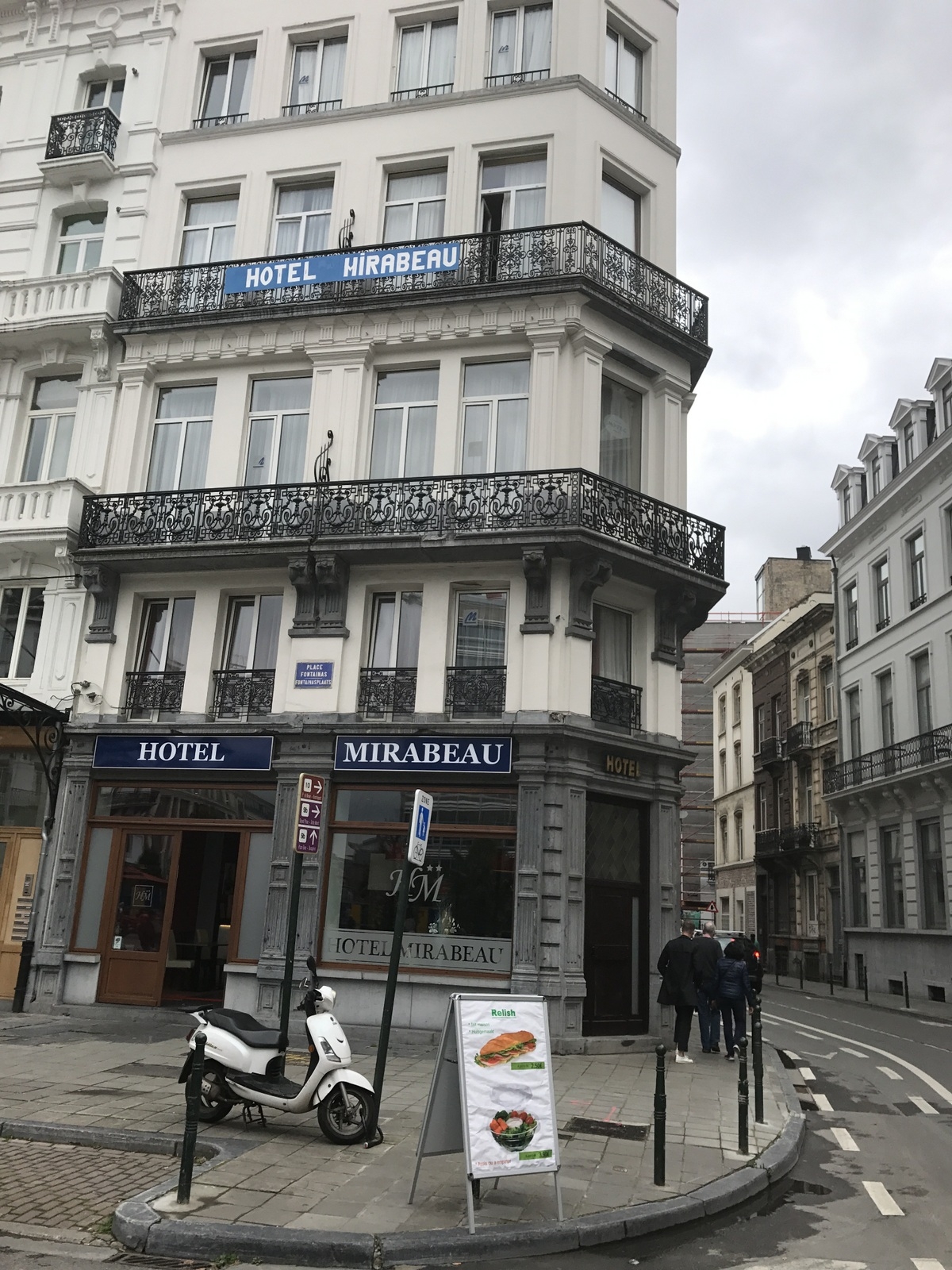
Upon checking into my hotel, a hotel which offered a room not much bigger than the cupboard under the stairs in Paris, I thought I’d wander Brussels for a bit. You’re supposed to leave your key at reception when you go out (as a fire check to know who’s in or out of the hotel maybe?), and as I dropped my key off I spotted a “free walking tour” flyer for 4 PM at City Hall. It was 3:57 PM and I was only a few minutes away (most things in Brussels seem to be only a few minutes away).
Mom and I had done a walking tour in Dusseldorf way back when and it proved invaluable as a “getting one’s bearings” overview of the city center. The tour here seemingly has proven equally useful for setting landmarks whilst walking about. After the tour as I set out on a dinner quest, I was able to think, “right, right – pissing little man, Tin-Tin mural is over there, the Grand-Place is there and — oh! WAFFLES!”
The tour began with a long elaborate history lesson about why the City Hall building has a bunch of architectural errors. Rick, our Spanish ex-pat student tour guide, regaled us with a tale of palace intrigue and time crunches and cut corners… only to have him tell us that was all an elaborate tall tale, a myth, a lie. Belgians love to tell stories, to tell myths, he said. So you can’t ever believe anything they say. I’m not sure he meant we should always distrust the Belgians but I took that and not to believe a single thing Rick told us thereafter. Still, I had a good time and a sporadic check of google when I had a dece connection implied at least SOME of what I’m about to scribble down is true. Or true-ish. It’s truth adjacent surely and when it comes to history I’m not sure we can get much better than that.
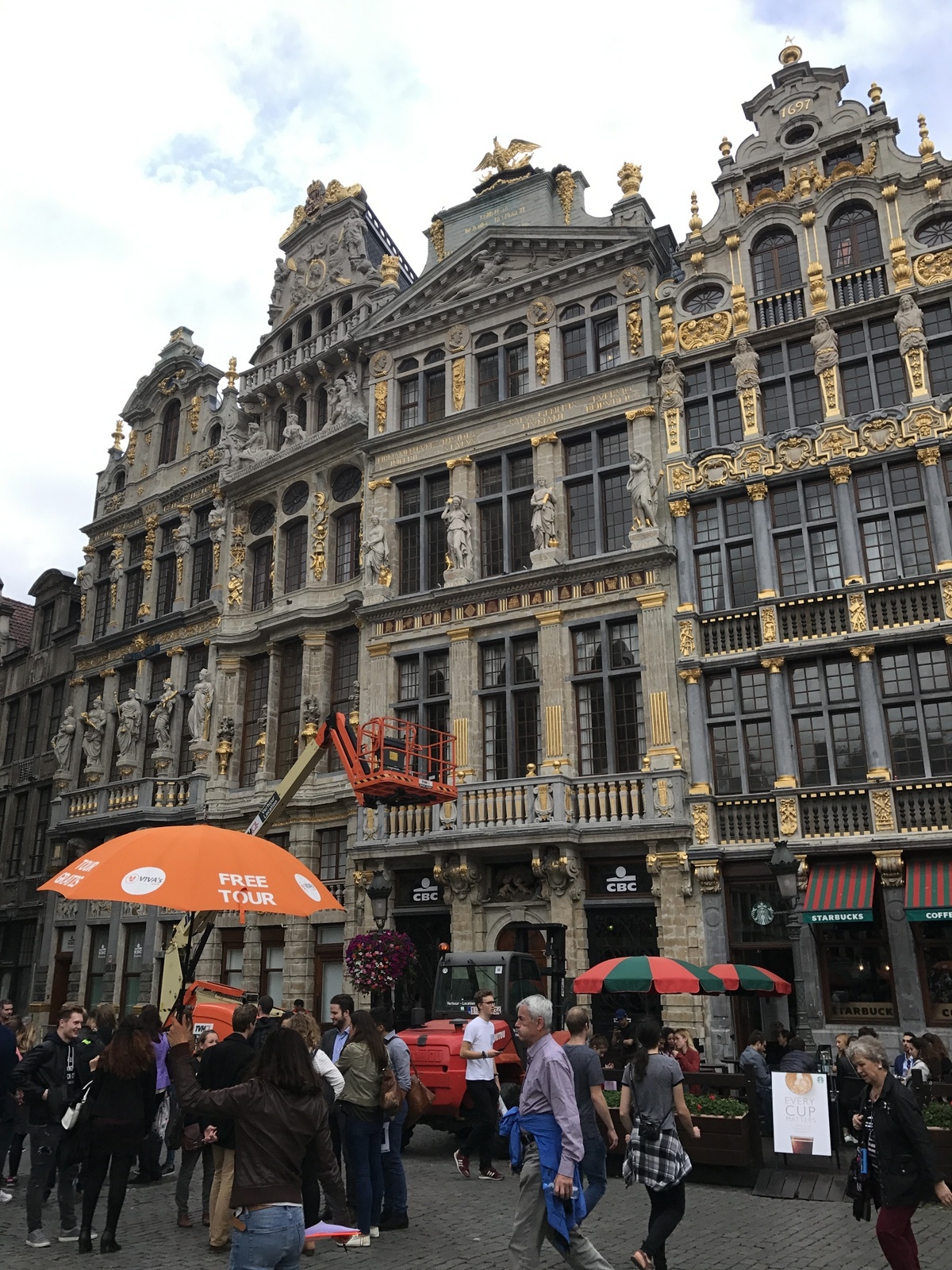
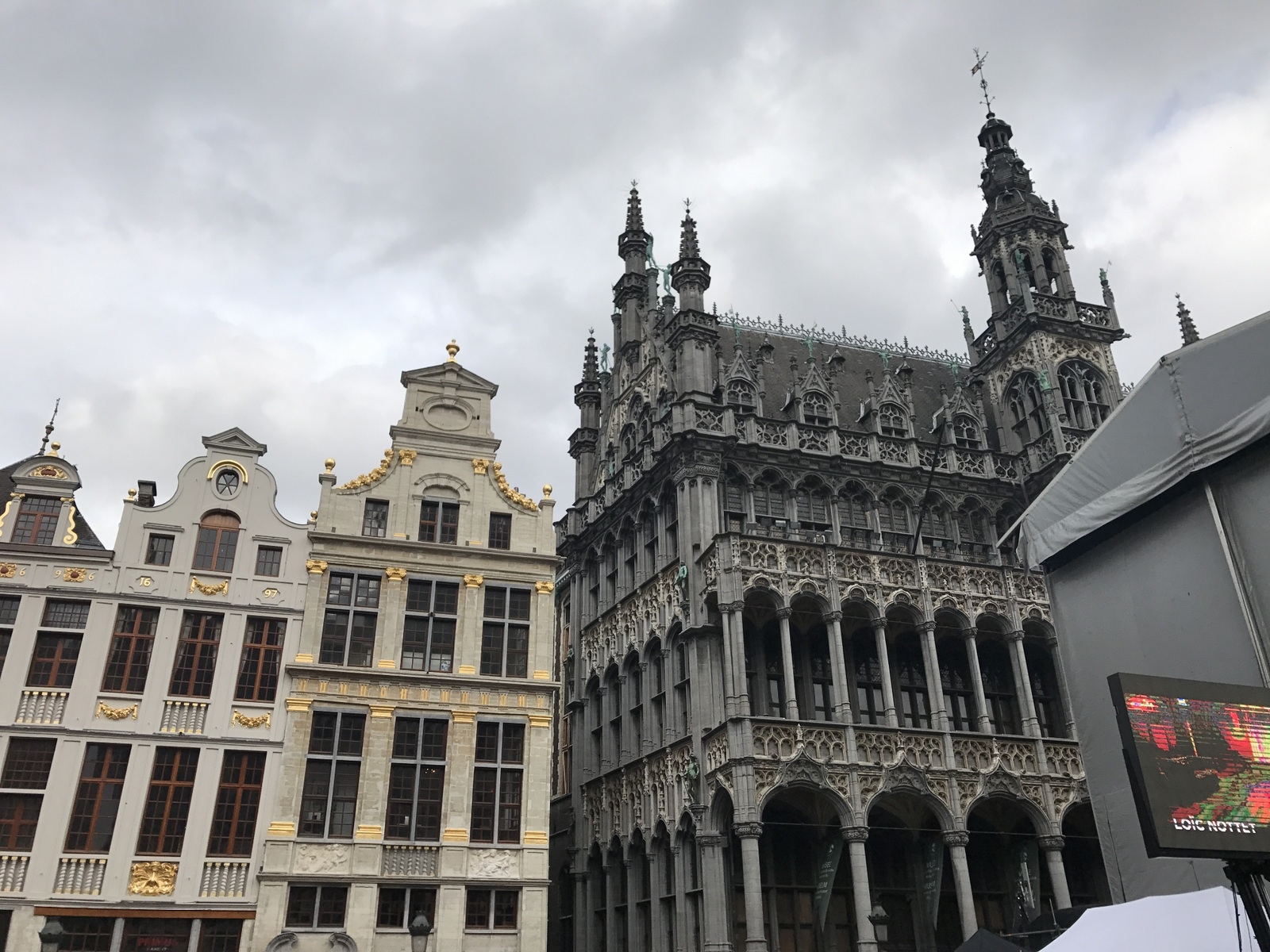
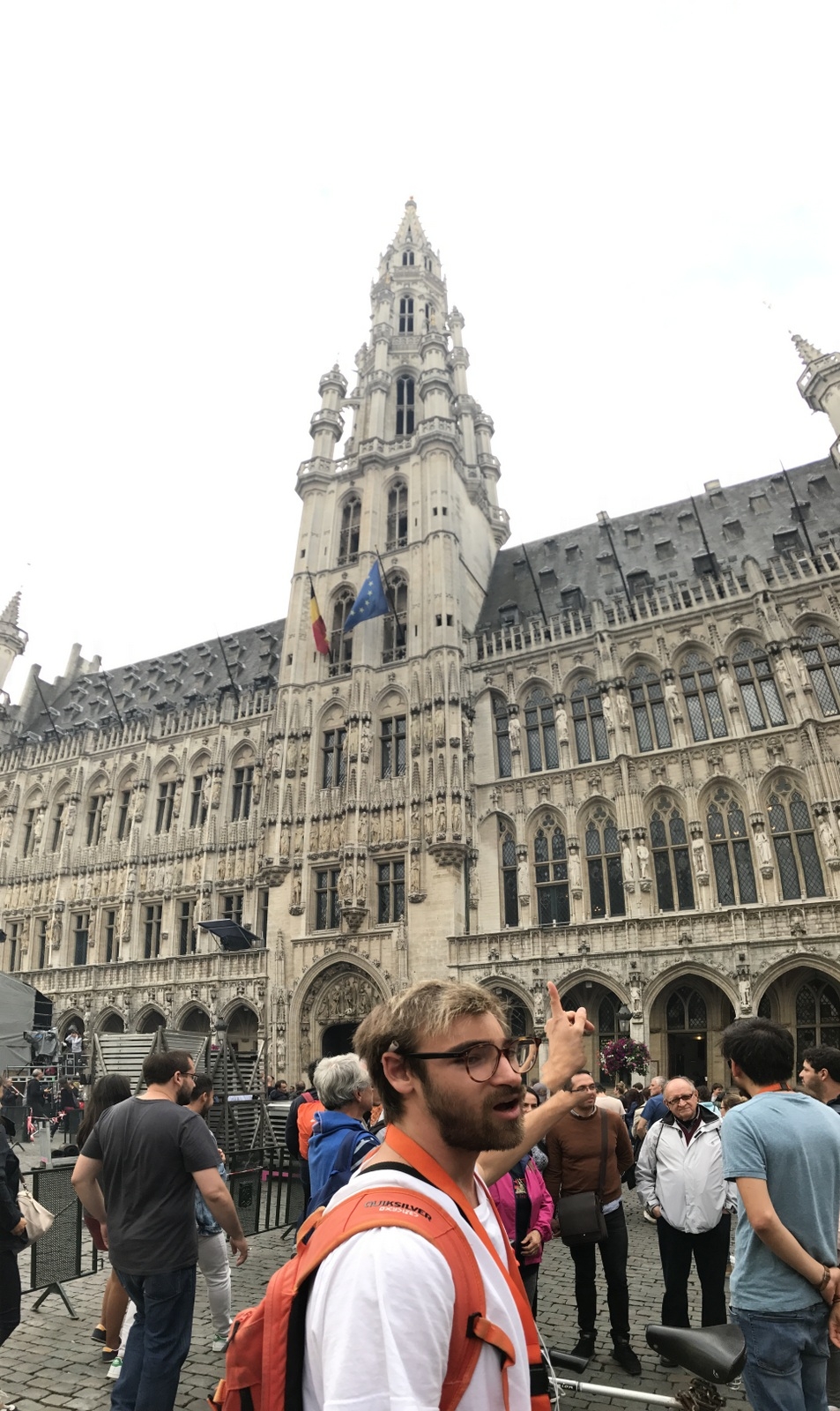
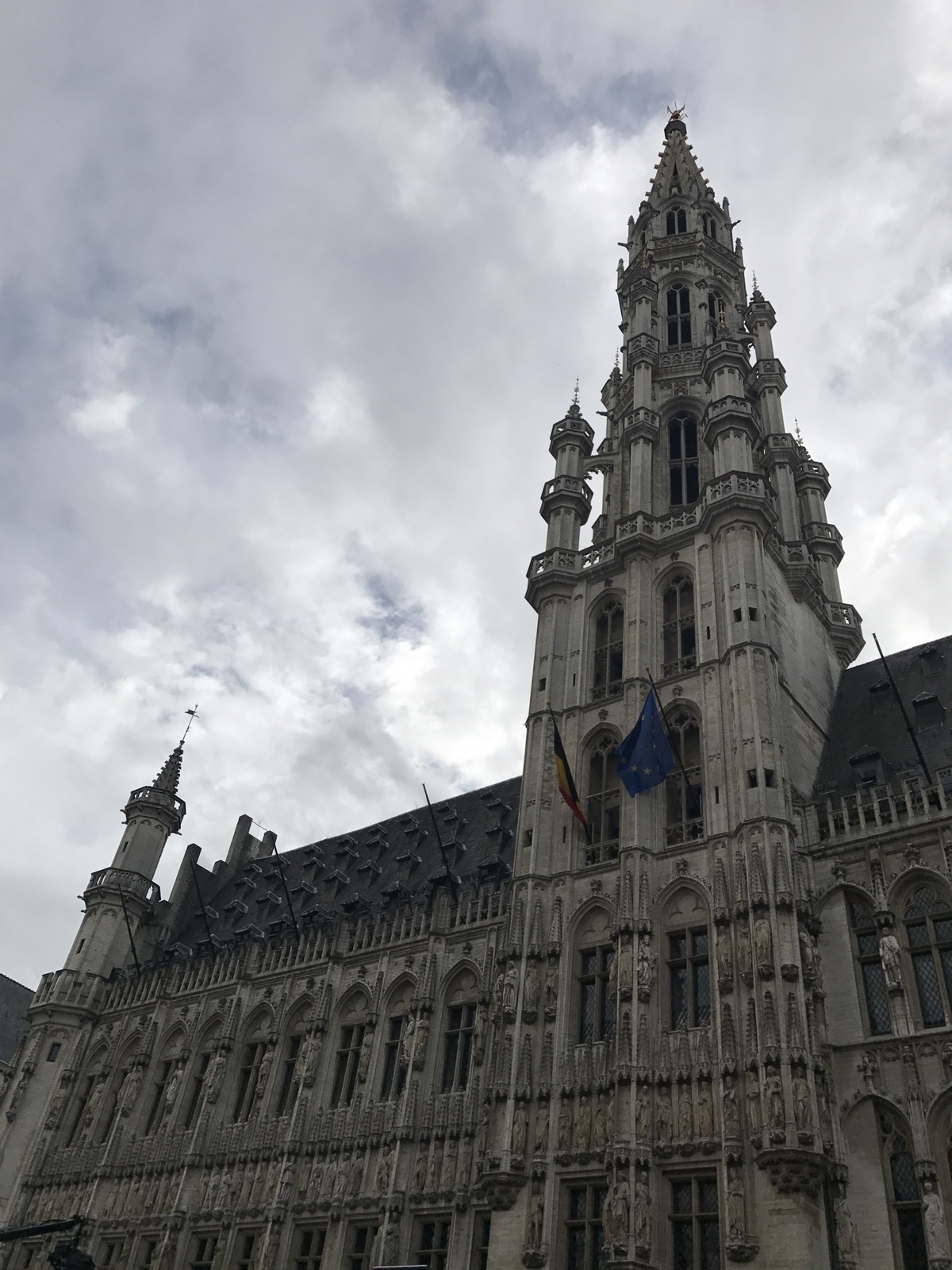
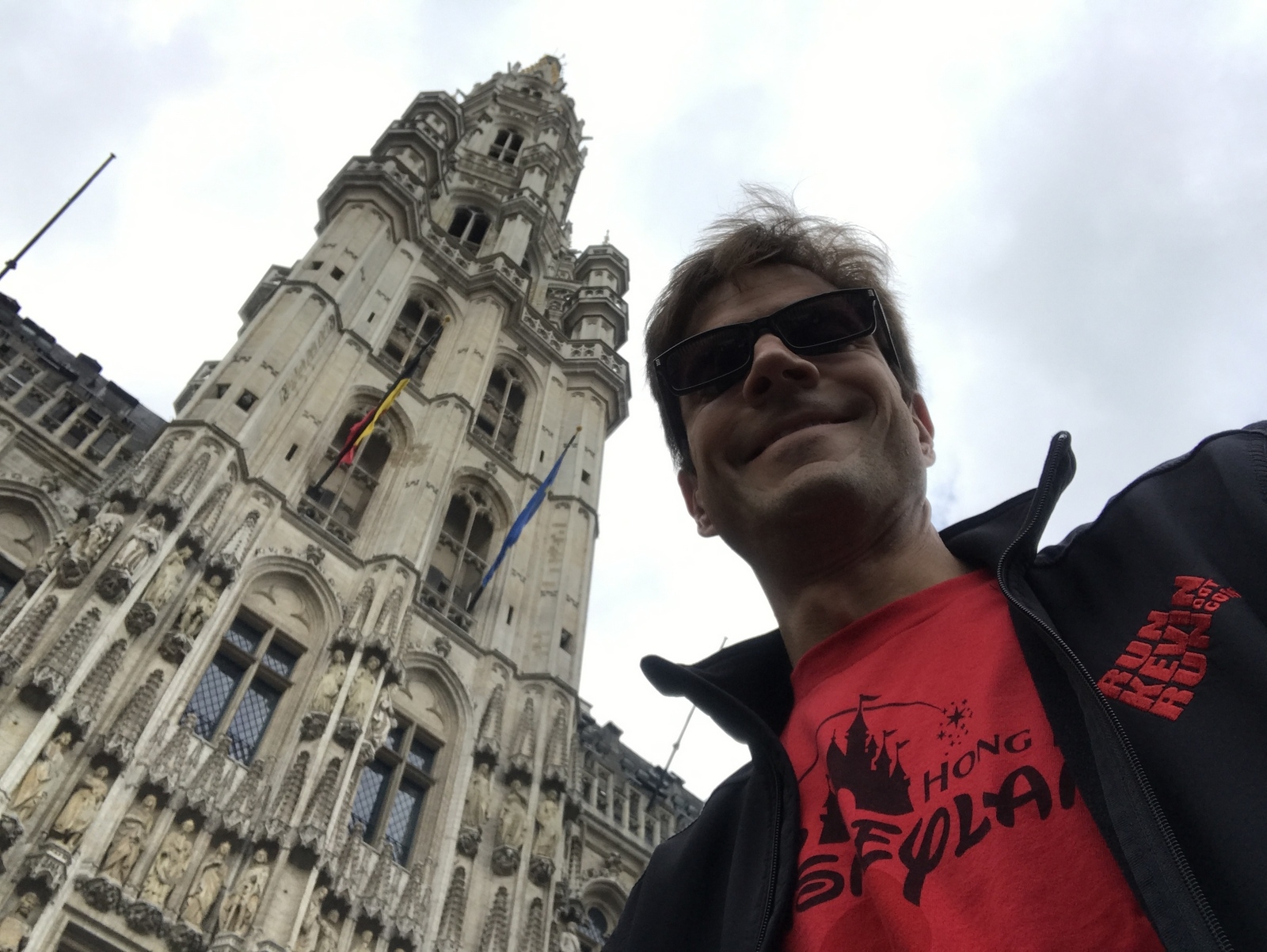
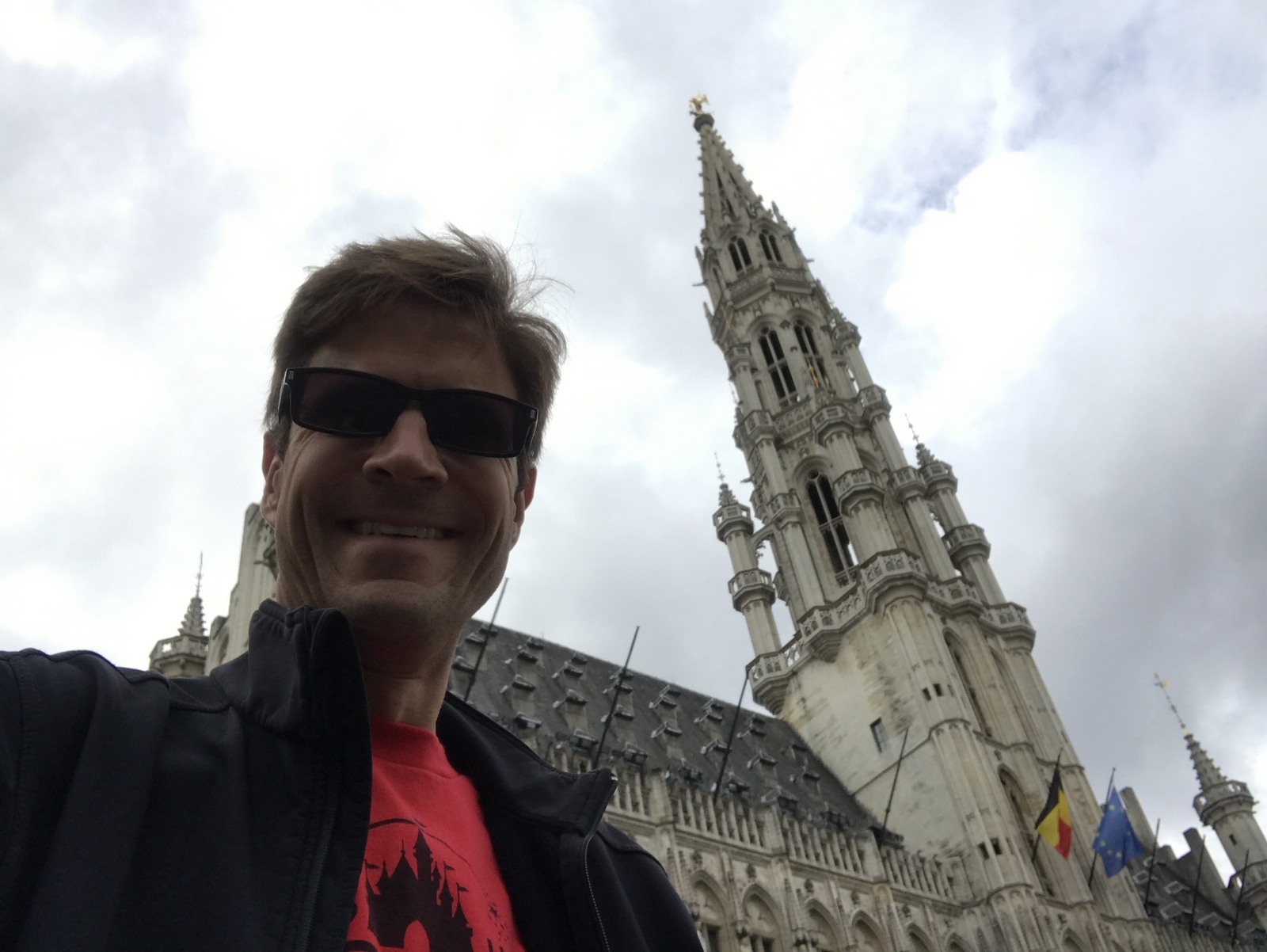
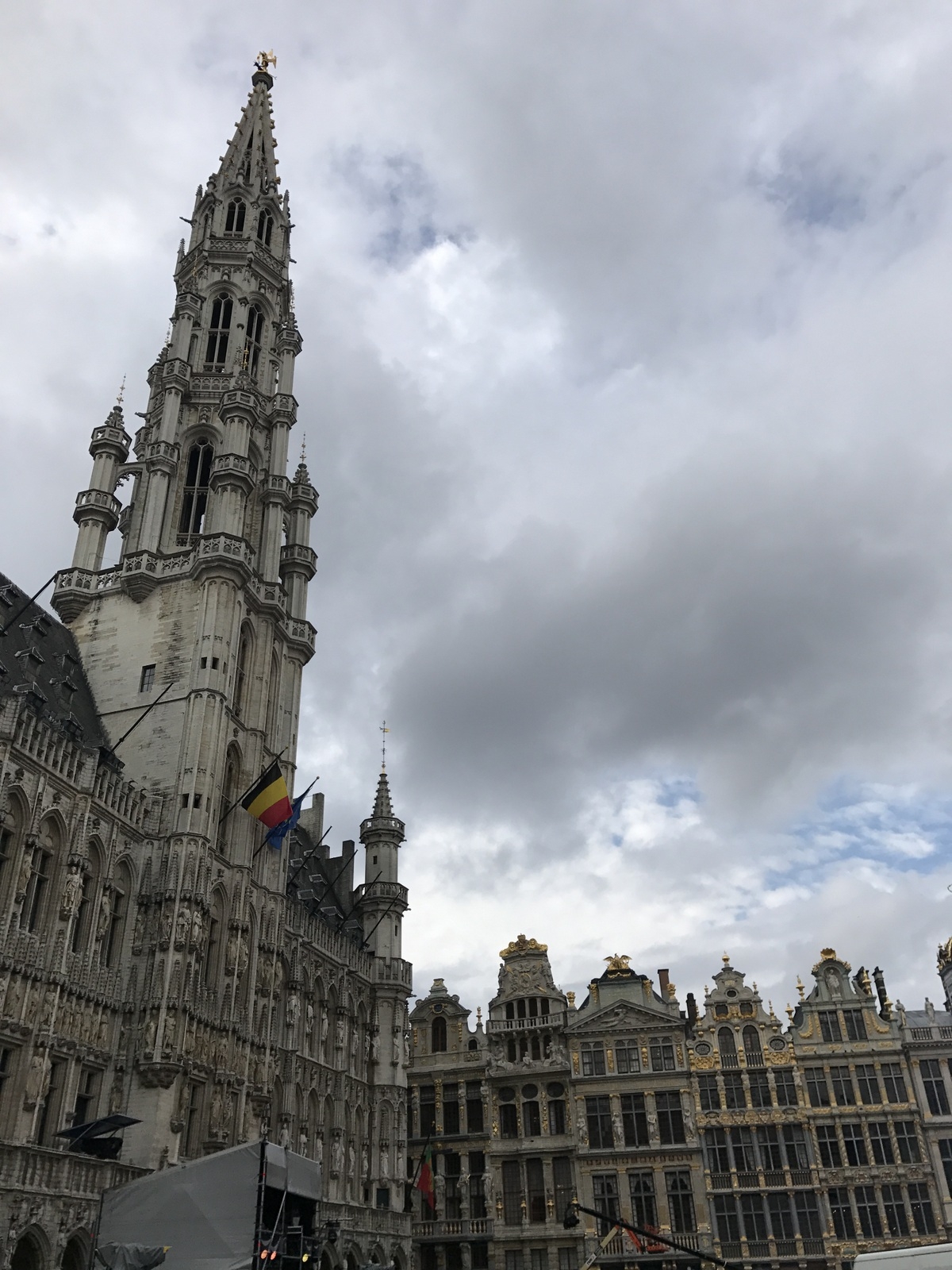
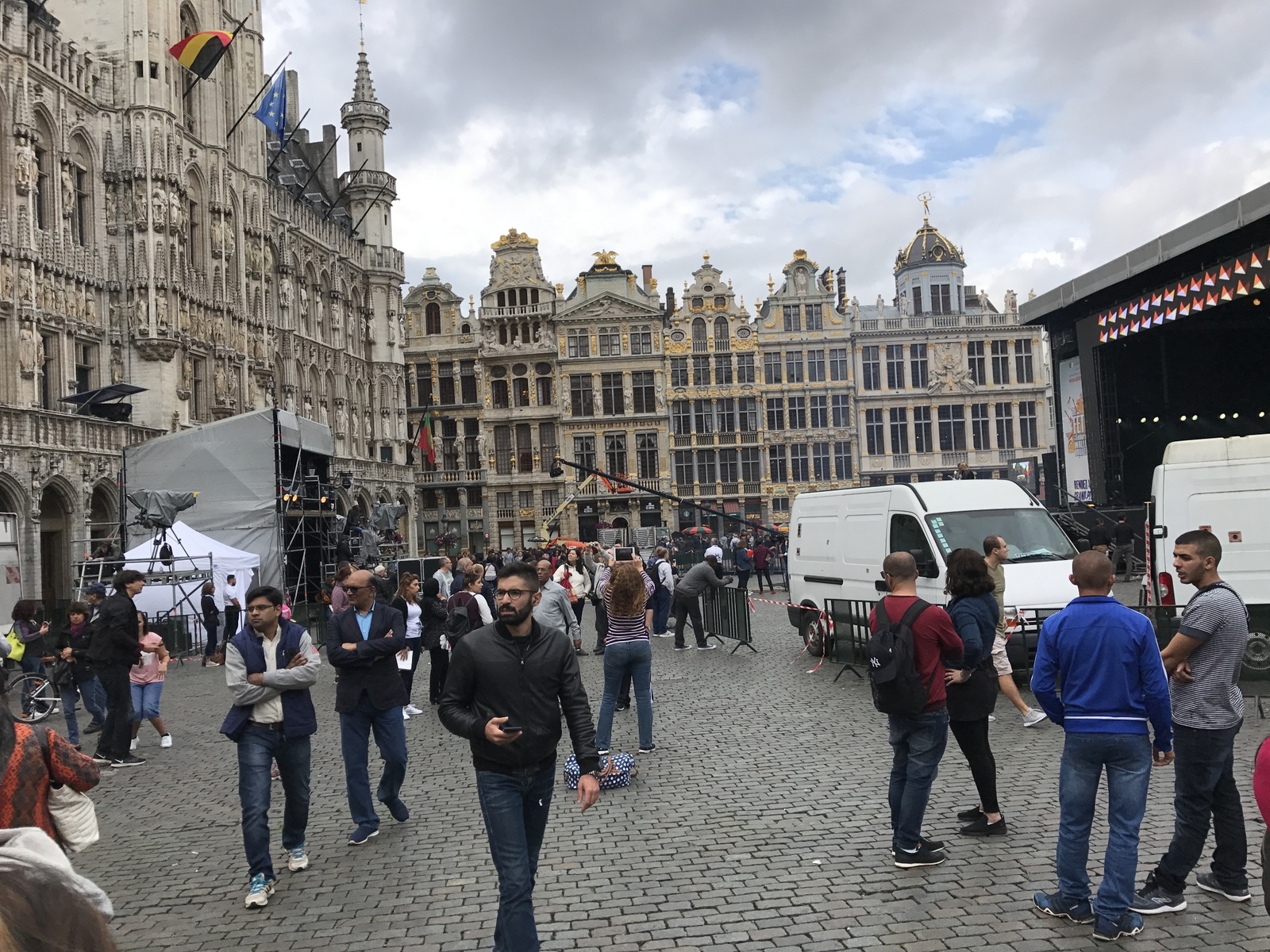
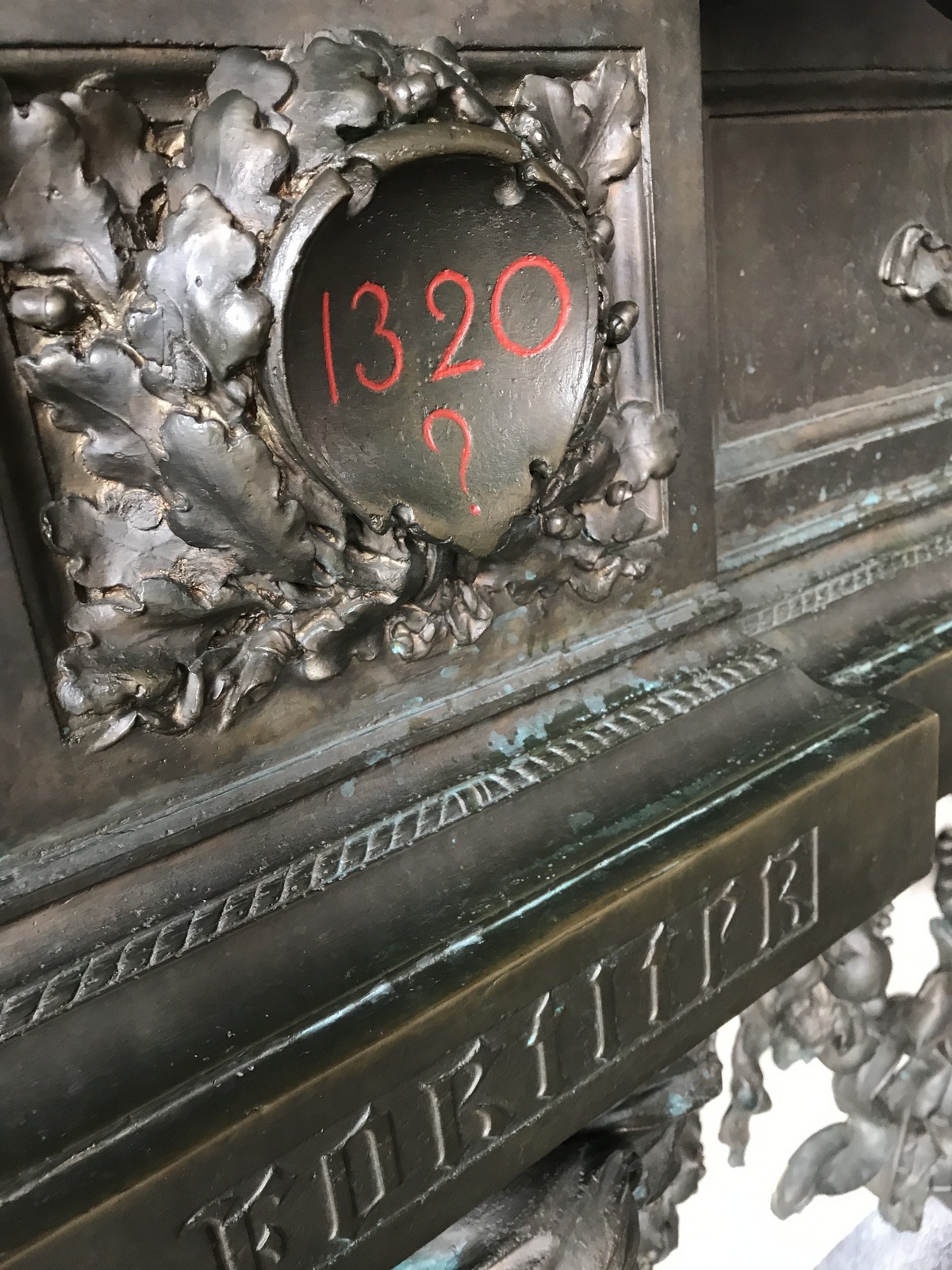
Especially in the town of Brussels which has had apparently at least five (5) discrete catastrophic disasters that wiped out buildings, records, and memories on at least five (5) occasions. But when you’ve been around continuously since before the Middle Ages, you gotta expect there to be a few calamitous events now and again. The most devastating one record wise was a great fire in the 1300s that wiped out the majority of pre-flames-engulfing-the-city records. This explains why one surviving statue, the official “lucky charm” of Brussels has a plaque with the date 1320 and a giant question mark carved next to it.
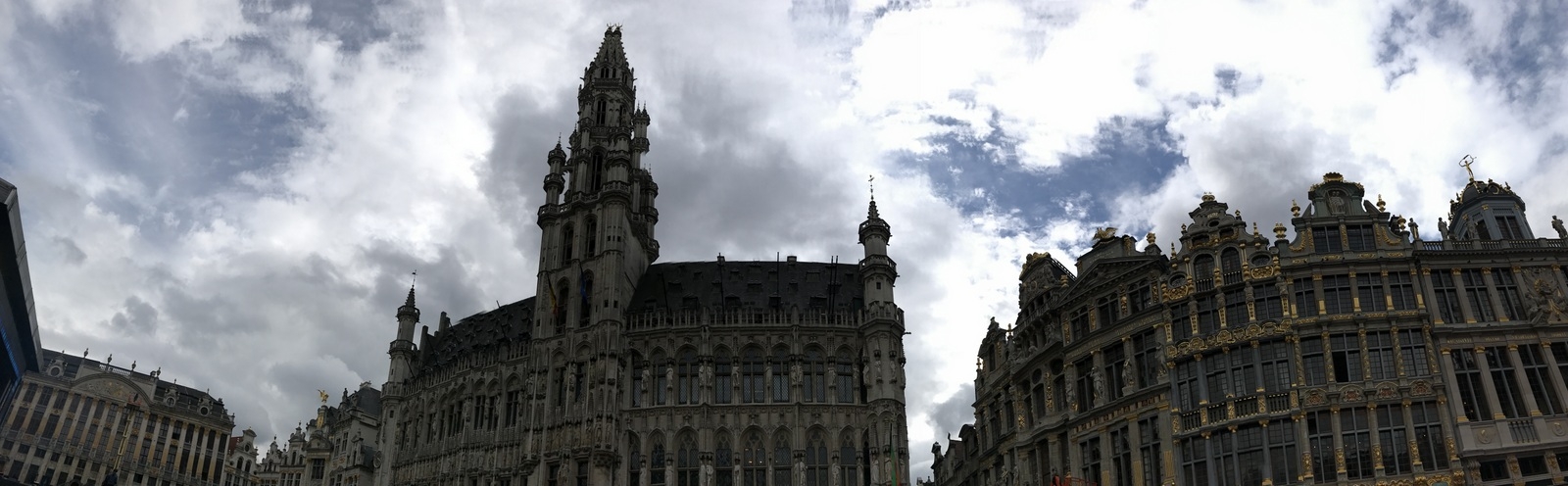
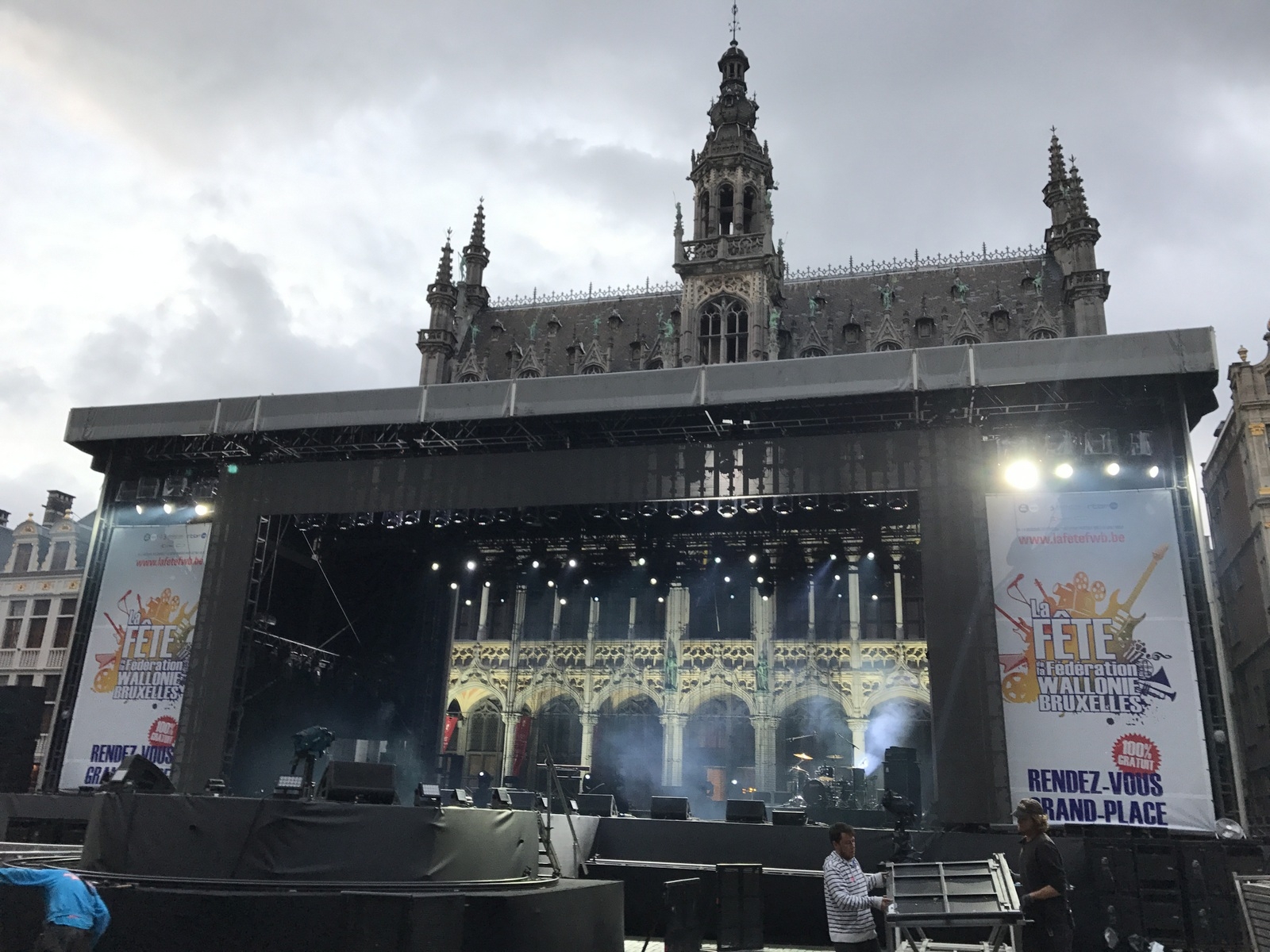
Standing in the Grand-Place, which was being readied for a free rock festival to be held on Friday night, we were amidst buildings from various time periods. The City Hall had withstood the comings and goings of cholera, fire, famine, etc. Other buildings, like the Three Little Pigs of old, those that were made of straw and wood, had not survived and were eventually rebuilt with stronger materials. Many buildings on the great marketplace square were built in the late 1600s/early 1700s. Originally they housed the various guilds of craftsmen and laborers and artisans. The Swan building (whose figurehead looks more like a goose to me) is the only building to still house the guild in question – the brewmasters of Belgium. The others have given way to live/work scenarios. One even has a Starbucks. But the buildings themselves have endured, the history, the meaning… even if it’s been a bit gussied up for tourists and modern commerce.
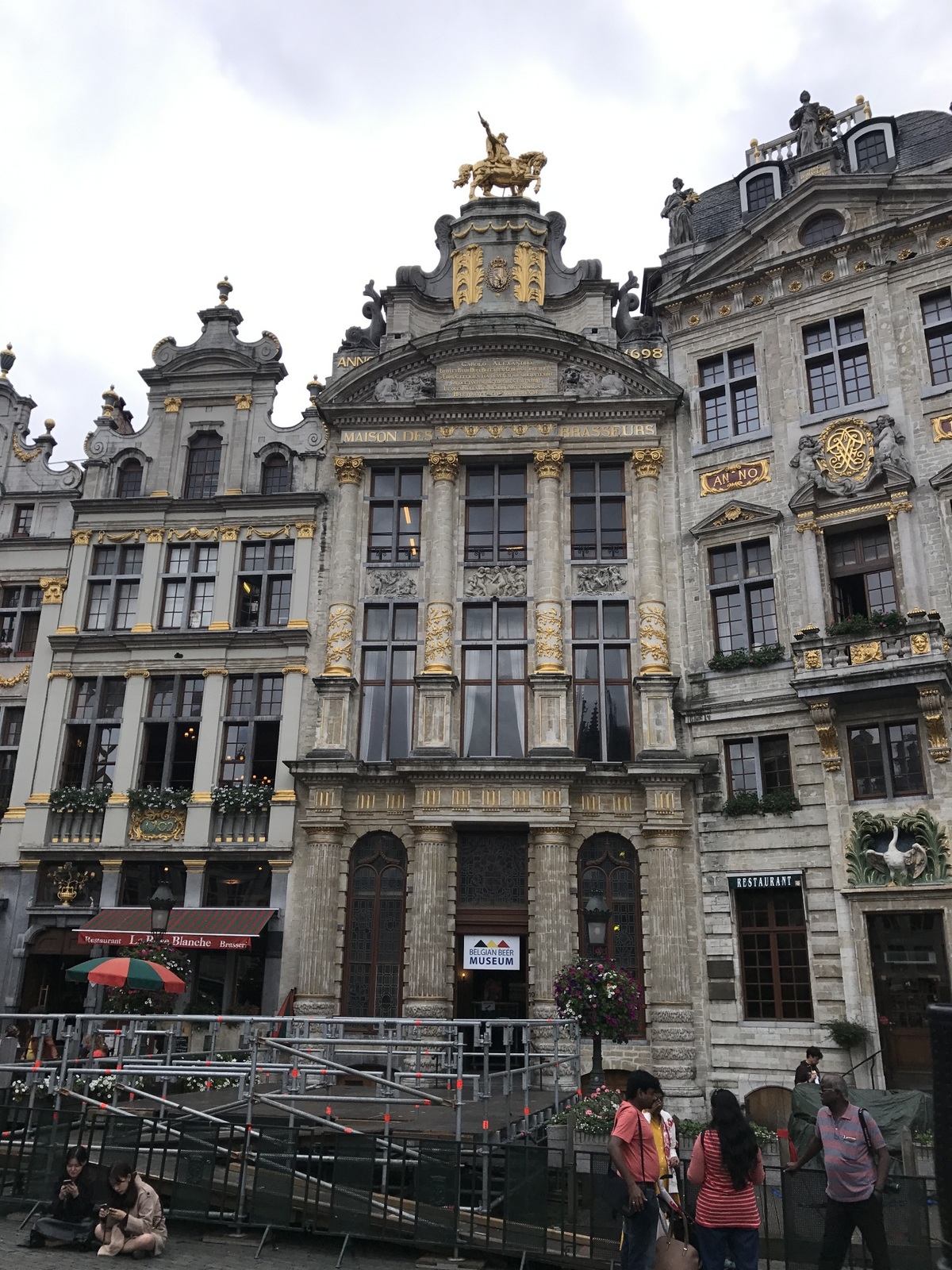
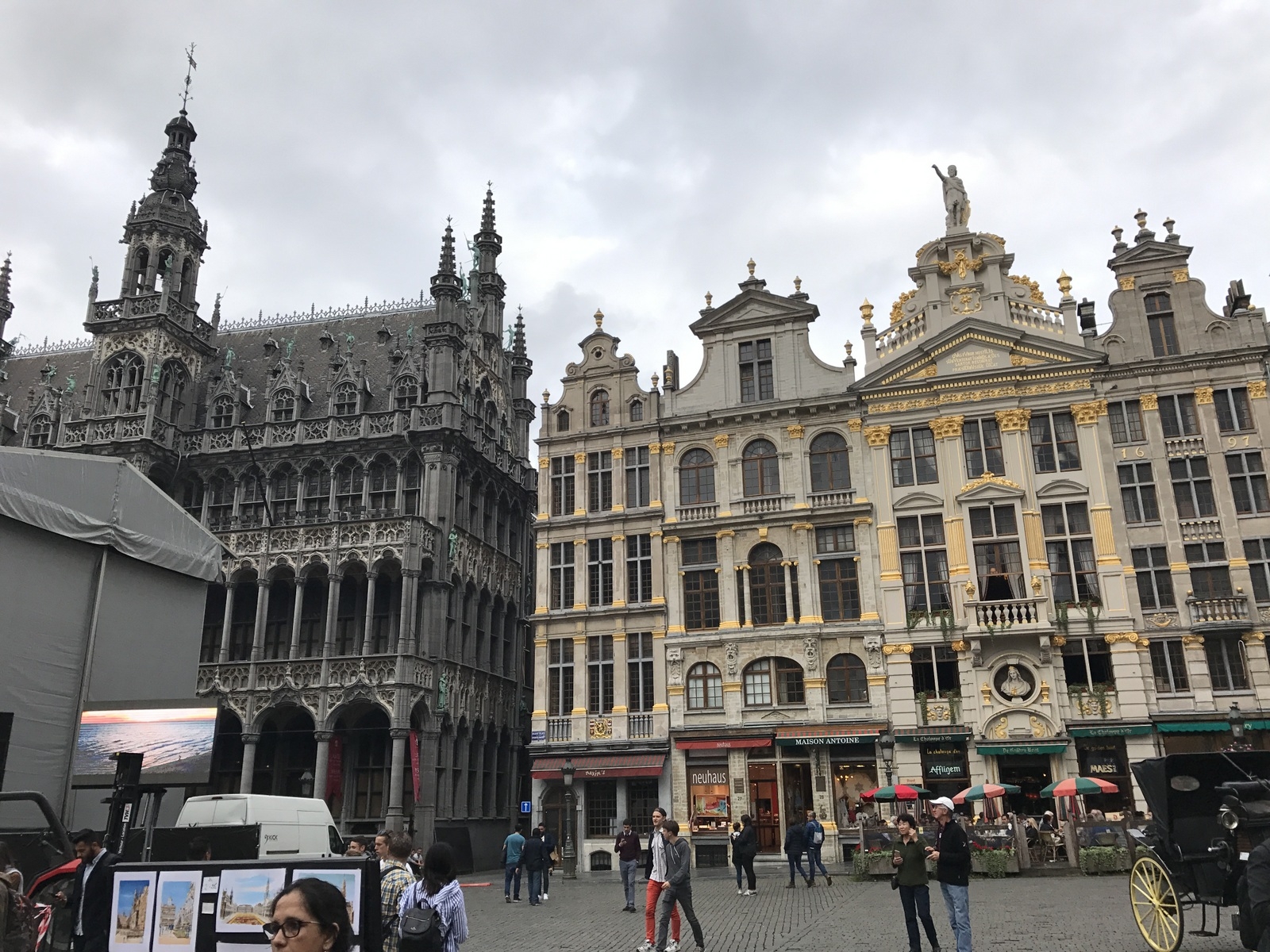
The Grand-Place has more history than I can even fathom. But two writers’ tales bear mentioning. Victor Hugo had an apartment in one of the guild houses and it was here that he wrote the majority if not all of Les Miserables. And across the square at a local coffeeshop just under that goose/swan, Karl Marx and Friederich Engels drafted the first pass on the Communist Manifesto.
Remember that lucky charm reference? Well, this guy Everard t’Serclaes was either the savior of Brussels or the traitor of Brussels, depending on your point of view.
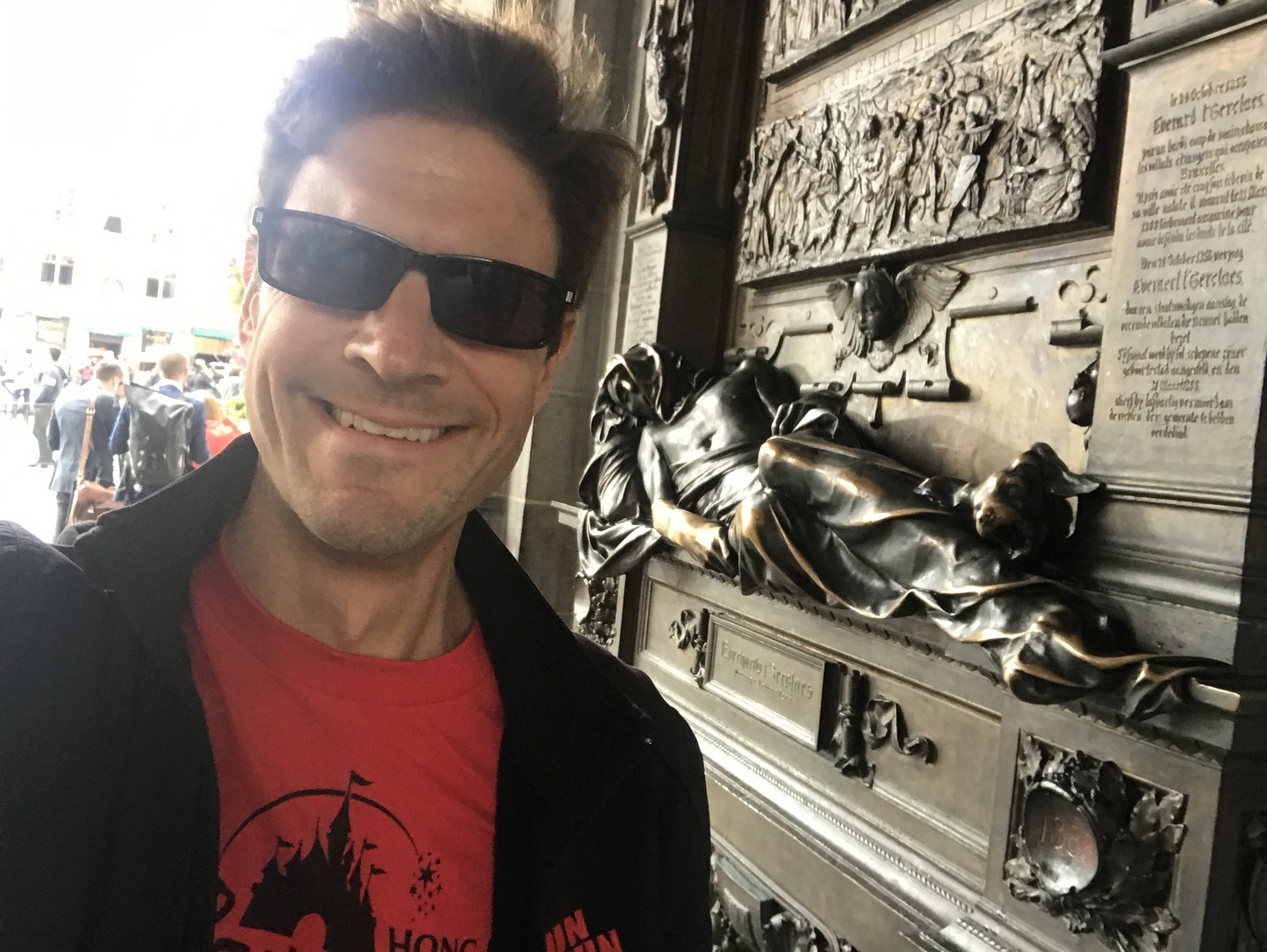
At least, I think this is right. He broke in and with the help of the Belgian fighters pushed out the Flemish army of the city … and was later killed by the supporters of the local Flemish government as a traitor. Potato, potatoe. But if you rub him head to feet, you’re mythically fated to return to Brussels. Rub his dog for financial wealth, his knee cap to find true love, and his arm to have a crazy night in Belgium. The most worn, smoothest segment? The arm. Go figure.
FLAMING PANTS WARNING: First, this is a copy of the original statue. Second, there’s a lot of different superstitions about what to do and what it means and how to make it come true. Or so says the internet which is only SLIGHTLY more reliable than Rick’s myths and fables.
The Stock Market building stands empty in Brussels. That’s because the Belgian exchange was consolidated into the EU Euronext Exchange in Amsterdam and therefore the building wasn’t needed any longer. It sometimes houses cultural exhibits and remains a focal point of community activities, but right now it’s just an empty shell of a place. There’s something to that as a metaphor for the EU perhaps.
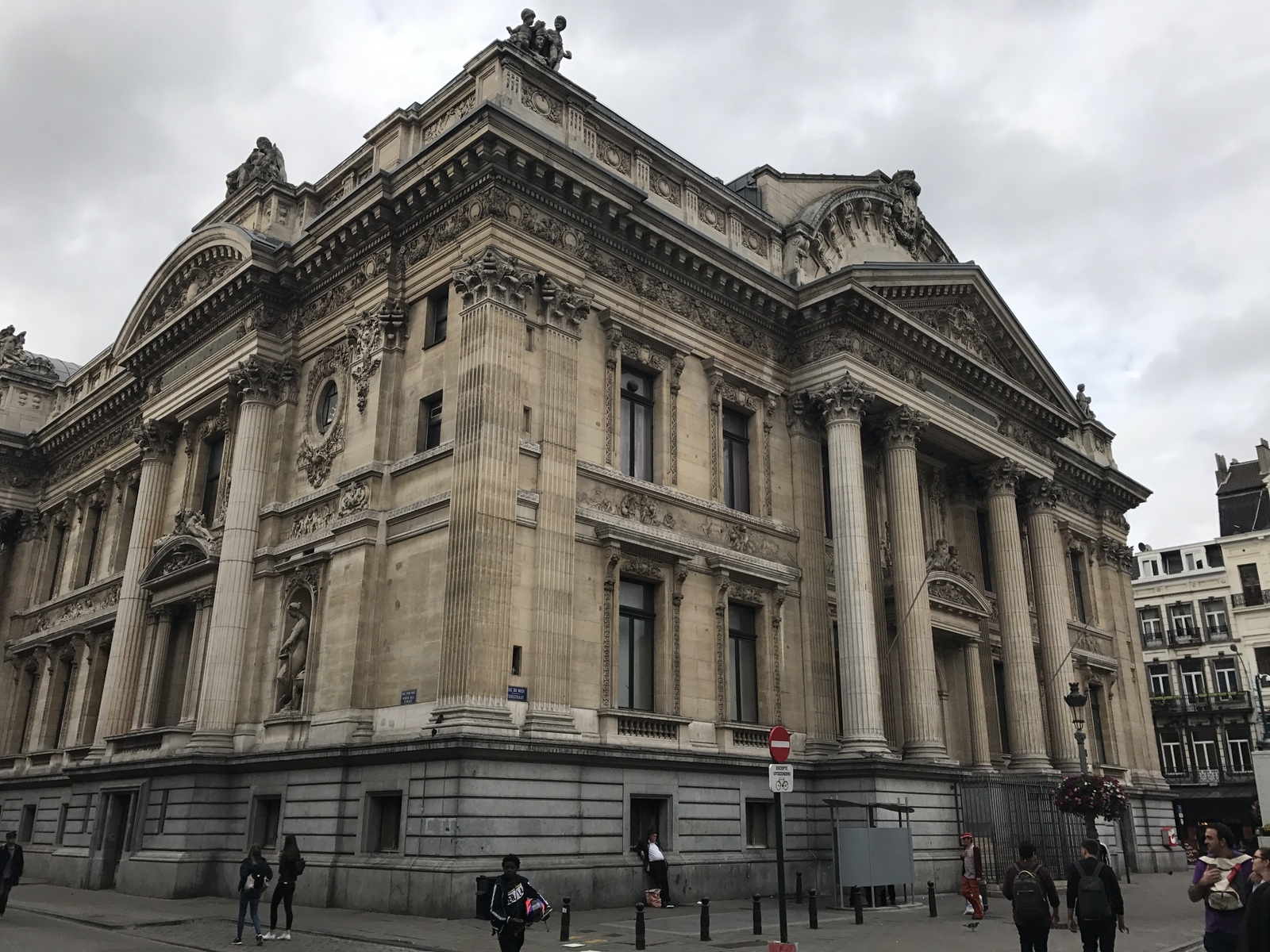
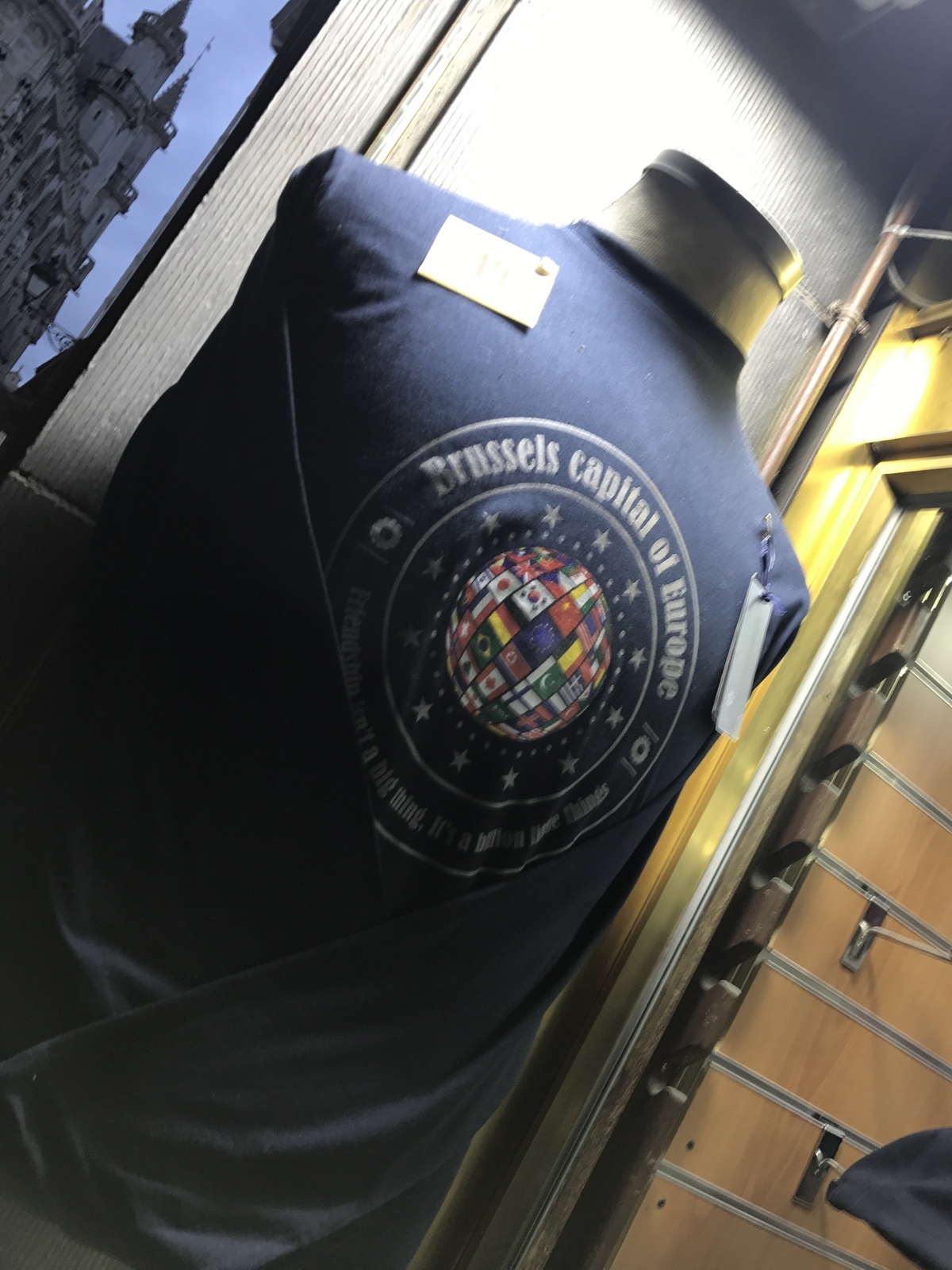
I was more intrigued by how Brussels was billed as the capital of Europe and the geographic center of the EU… right up until some late additions to the membership shifted the spot into Germany. Shades of Belle Fourche, SD, no? I never did ask if Brexit would shift the geographic center any. Huh. Something to research I guess. I did look up the capital claim — the EU has no official capital. Brussels is the de facto capital because a lot of meetings were held here and a number of major EU institutions are based here. As well, no one could agree WHERE the capital should be and Belgium was set originally for alphabetical reasons to avoid the political wrangling of setting some place temporarily. Temporarily has become de facto permanent because, well, politics.
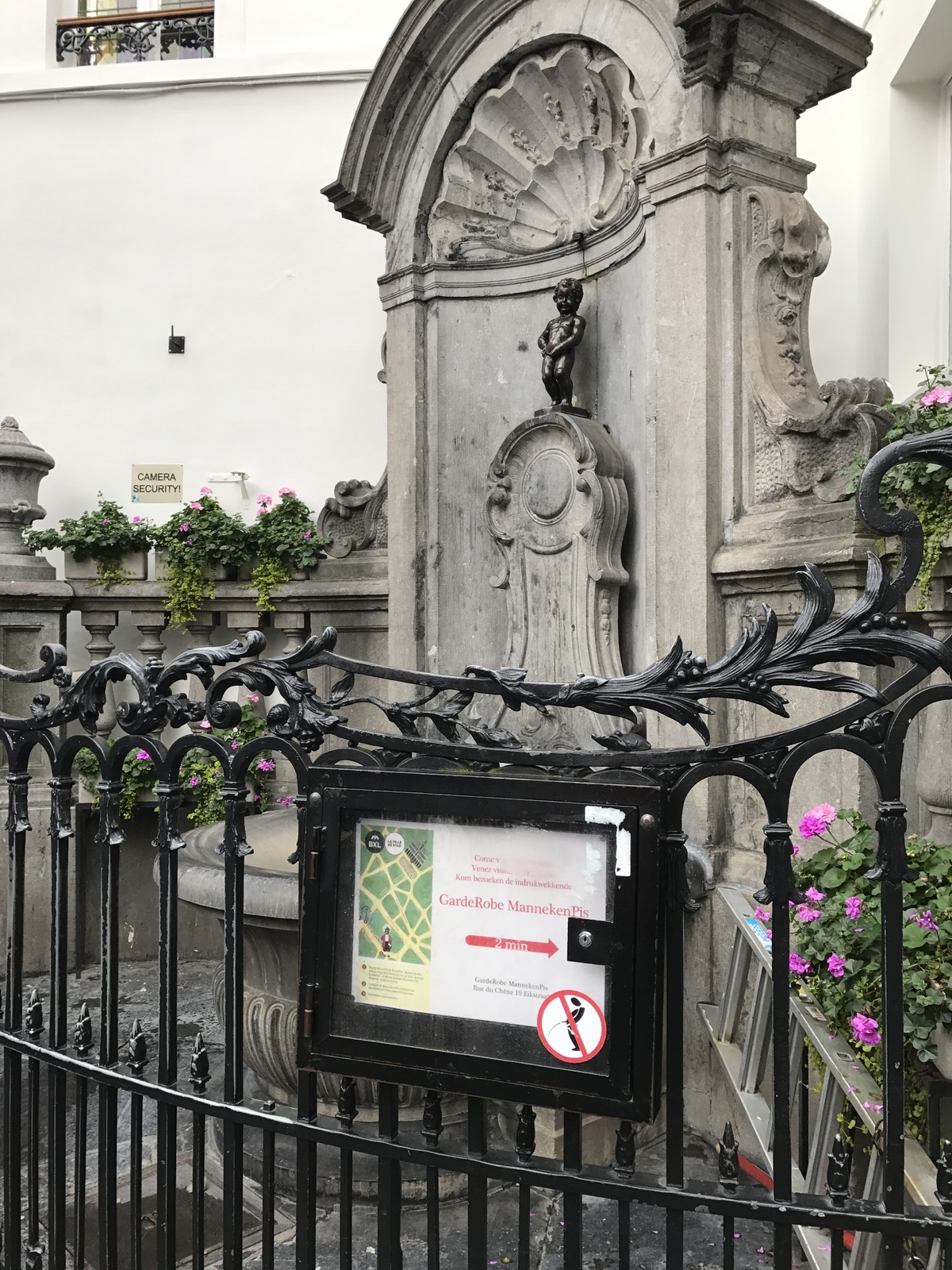
The creepier detours of the tour included what has been hailed as the third most disappointing tourist attraction in the world (or so says Rick). The top spot is the Mona Lisa, I suppose because it’s smaller than people imagine and it’s behind some serious plexiglass and then kinda cordoned off from the viewers. The number two disappointment is some statue only visible during certain tides and is just kinda meh. But number 3 on the list of biggest dissapointments is mannekinpis, literally translated as “little man peeing.” It is… what it is.
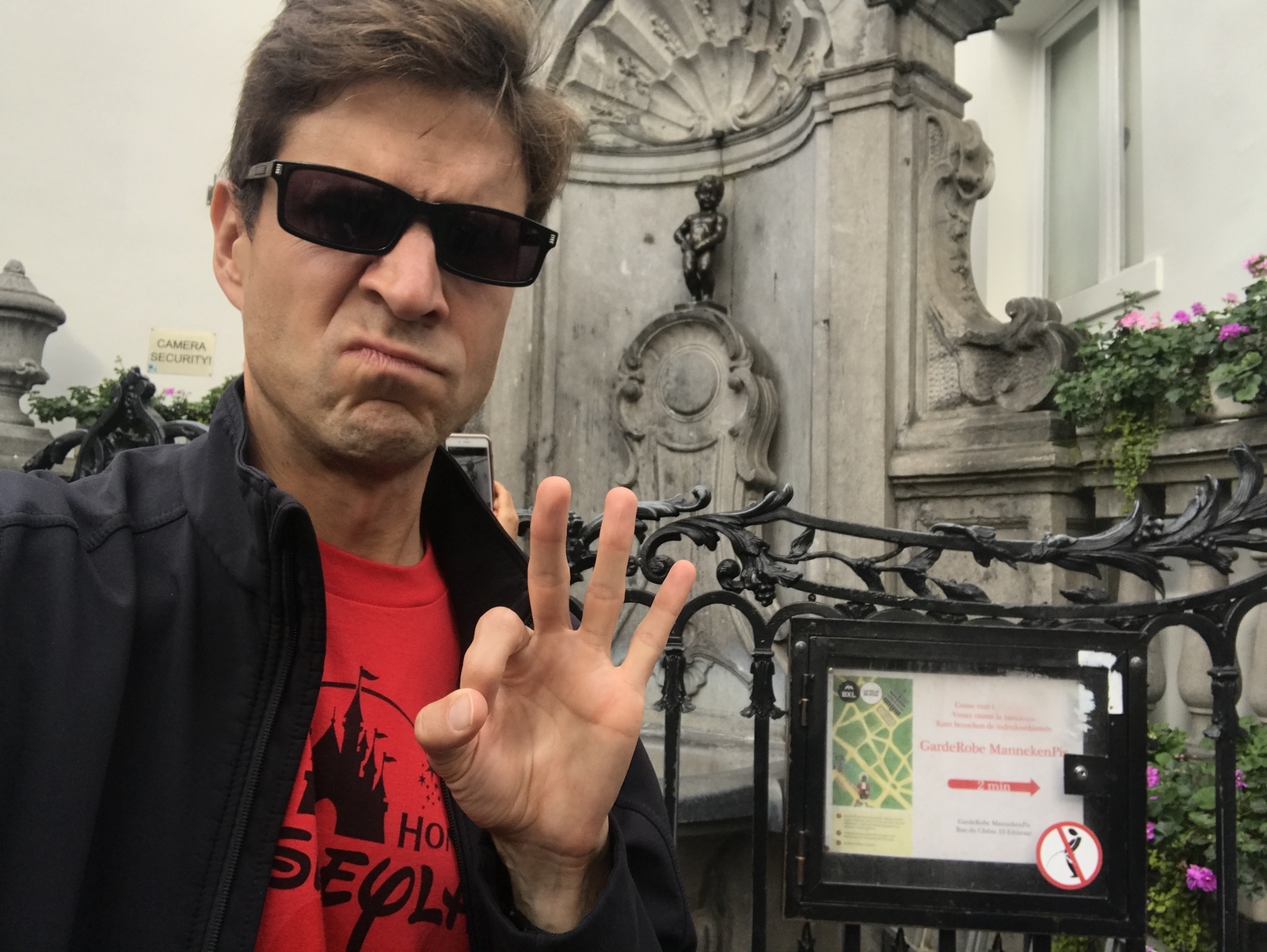
Editor’s Note: I’m holding my fingers the European way to signal “3”… or so Rick told me.
In 1987 a near bankrupt businessman constructed a female version in his dark alley to attract potential customers to his café/bar/side of town. The statue remains but that guy and his business are apparently lost to history (again, so says Rick).
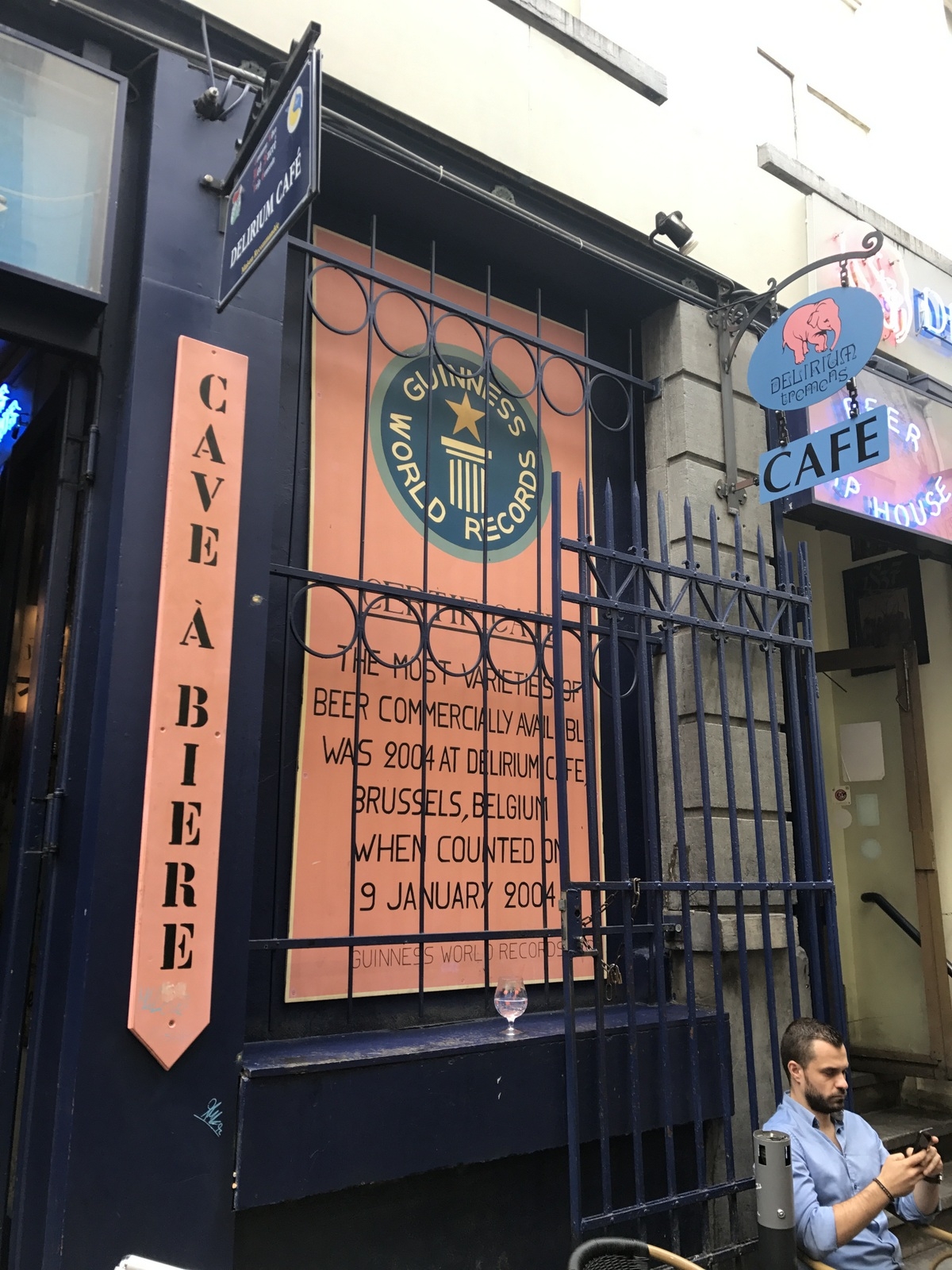
No Photo Of This. I don’t know. Sometimes you just think, “am I really going to snap ANOTHER peeing statue photo?” and find yourself questioning some life decisions. But the Jeanneke Pis fountain was right across the way from the famed Delirium Bar. This place holds the world record for most number of beers available for sale at one time. They broke the record in 2004 with 2004 beers for sale… and each year thereafer they added a beer to honor the calendar. A while later though, some upstart bar topped them by 100 beers trying to steal their thunder. Delirium responded in this escalating beer race by topping THAT amount by 1000 beers. So the record is something like 3117 right now. But that’s only on one specific day. Usually they only have 500 beers available at any one time. Still, their beer menu is like an old Sears Roebuck catalog.
Note: There’s also a peeing dog and when I first googled “landmarks” near me, it popped up… but I misread it as “peeing hot dog” which I was REALLY intrigued to see. Alas, it was just this:
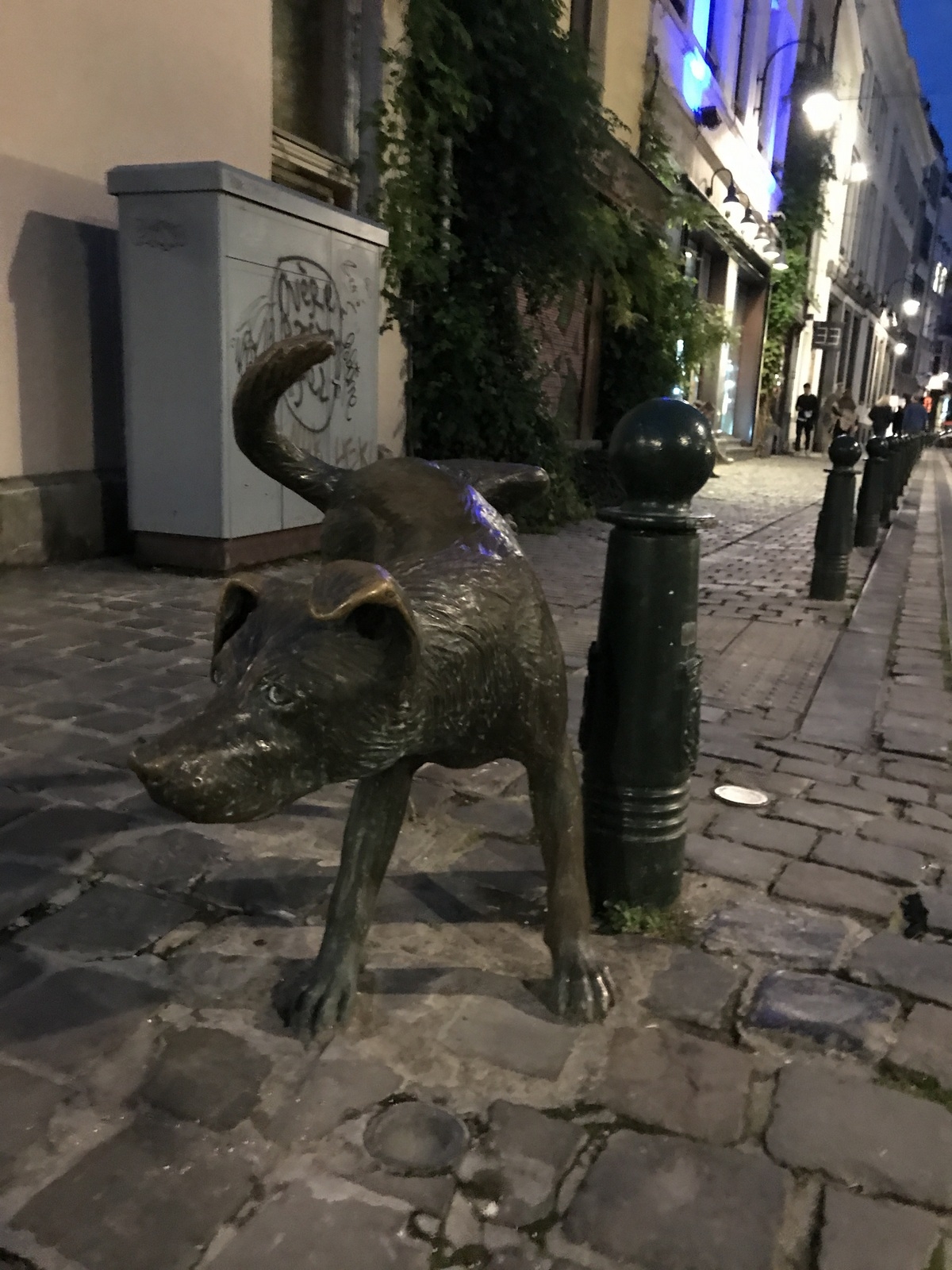
But I digress.
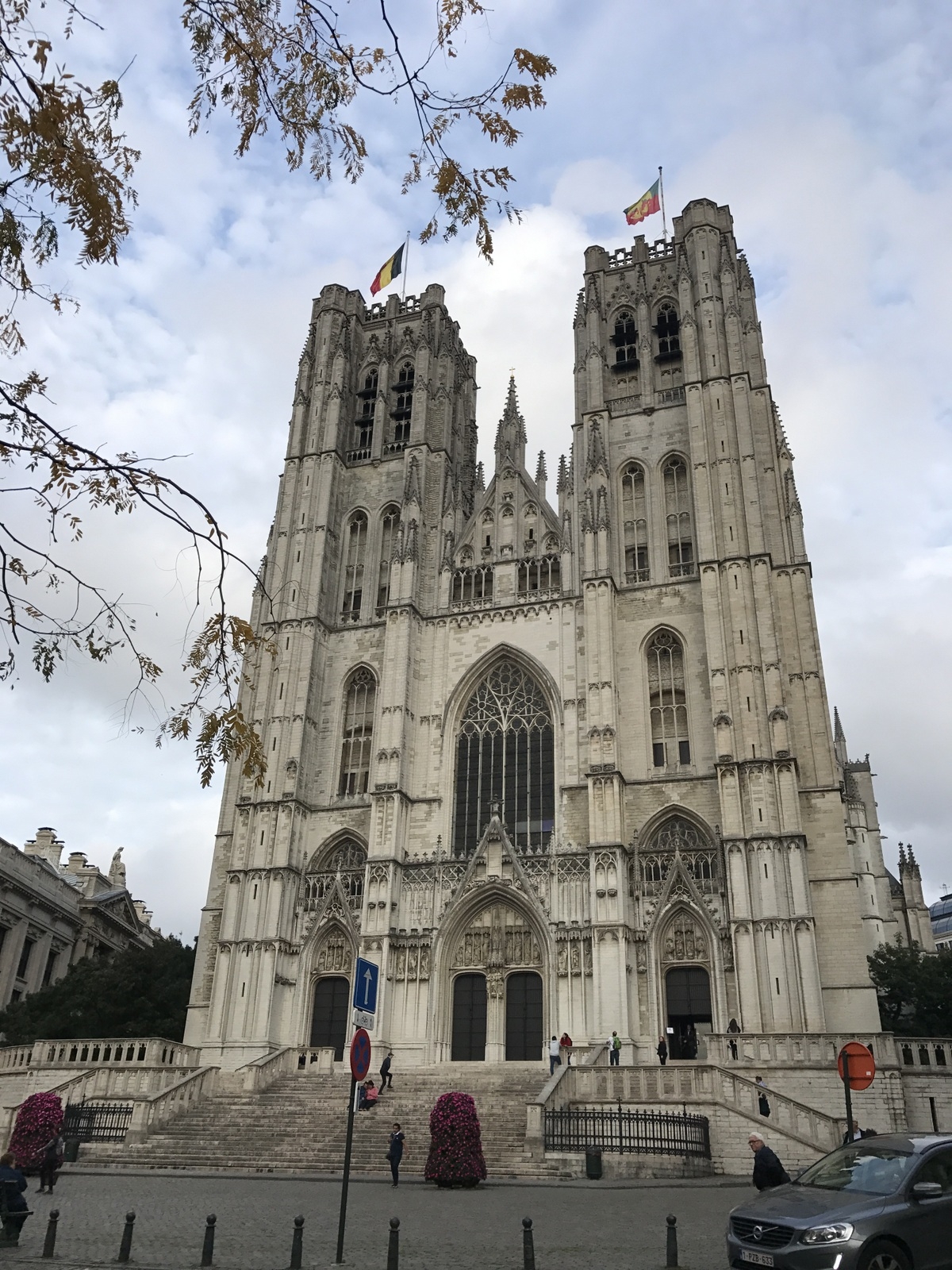
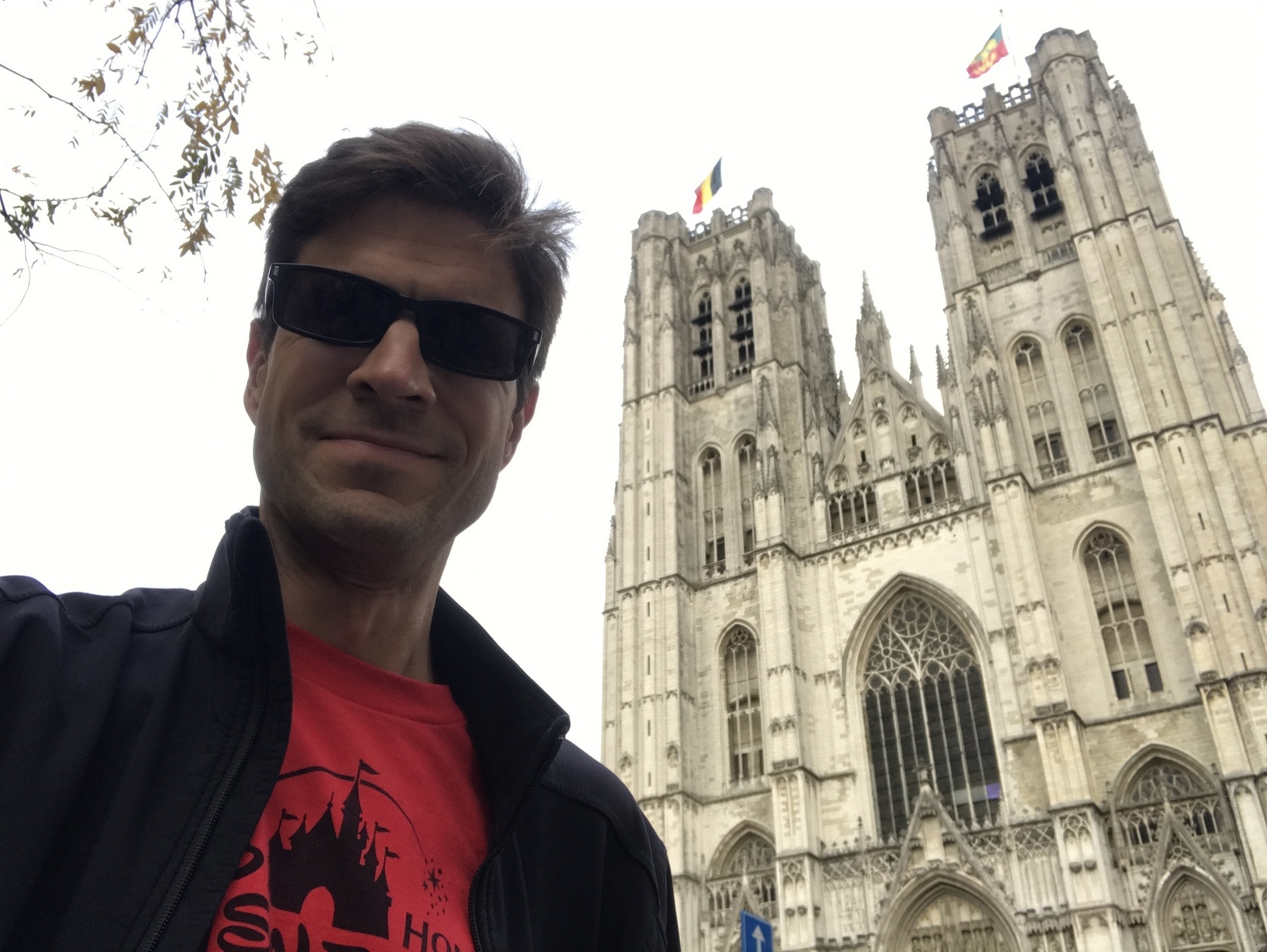
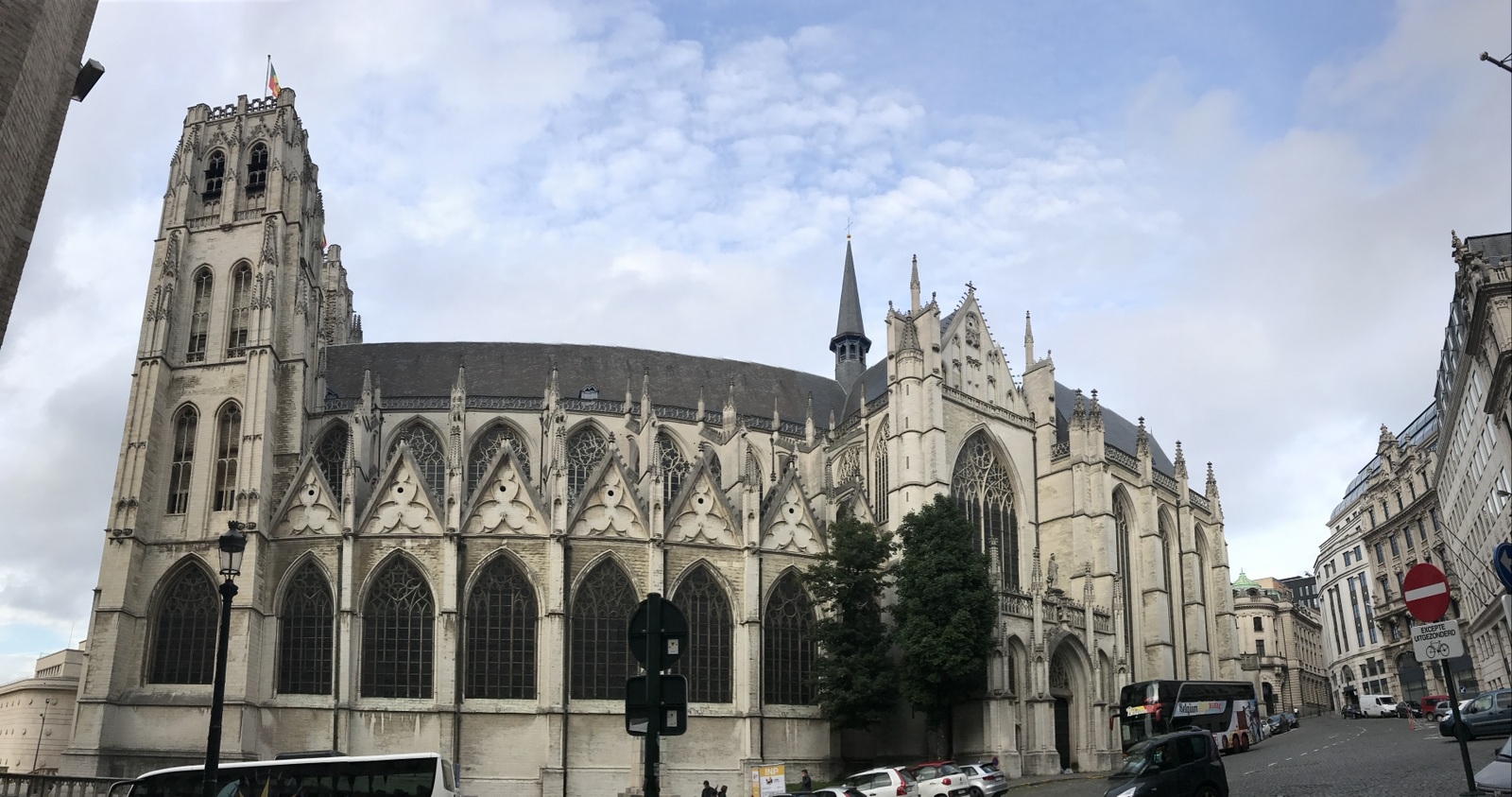
The Cathedral of St. Michael and St. Gudula has a strong gothic vibe and I almost thought it was Notre Dame-y… though not quite. There ARE virtual reproductions of Notre Dame around the world (I saw one in Saigon for example) but this is just a big ol’ gothic cathedral… that took over 300 years to build. So much time, so much money, so much… MUCH for this. But we all have crazy projects I guess.
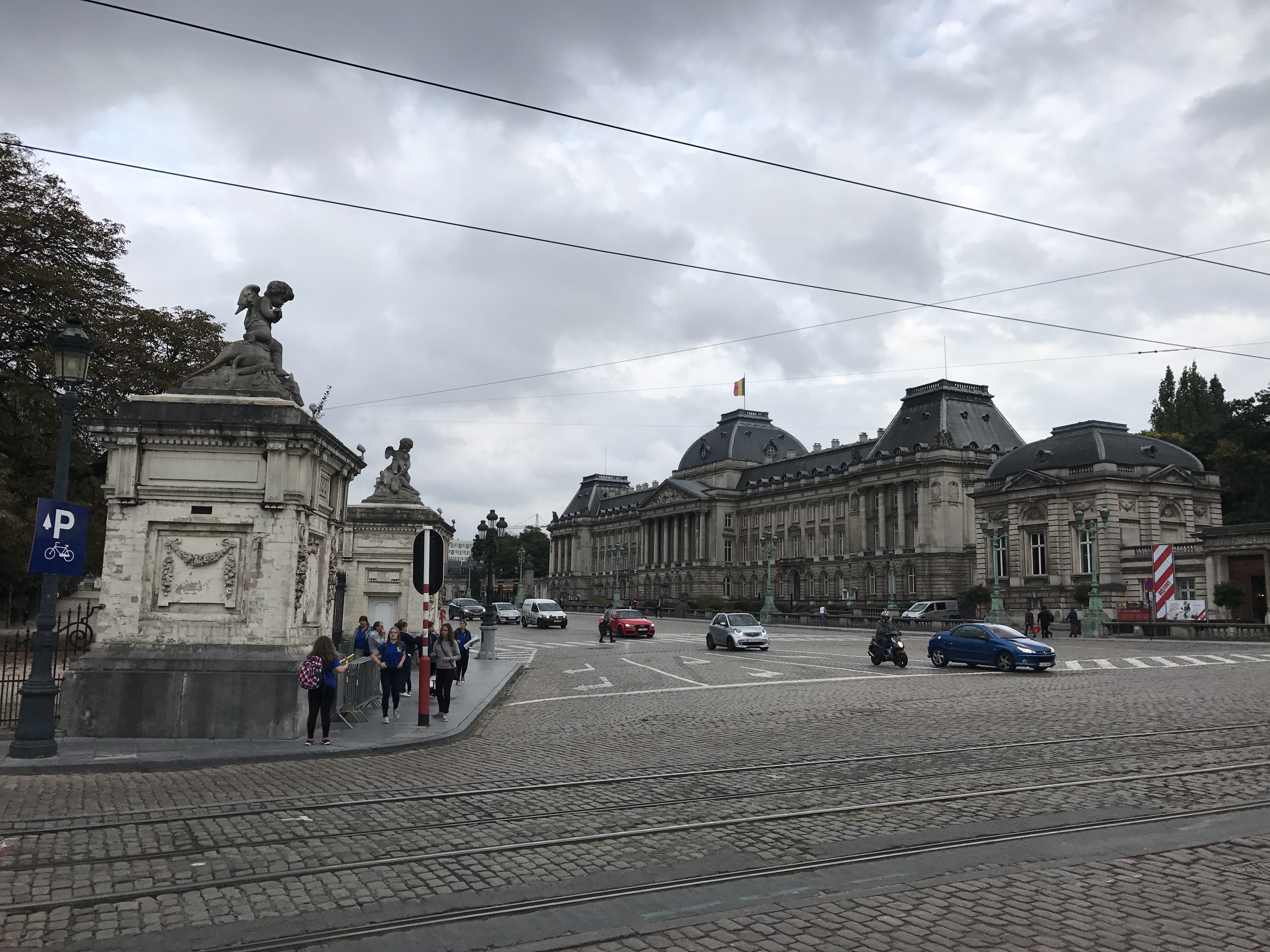
We ended the tour with a view of the Royal Residence of King Philippe I, the current monarch “in power.” Belgium has been a constitutional monarchy since 1830… and Philippe’s forebears were in fact the first ELECTED monarch that same year when the framers realized they wanted a figurehead to serve as monarch and thus scoured the land for a candidate. Philippe’s ancestors won the election and the rest is Belgian history.
Speaking of Belgian history, a new rule came into effect for Philippe’s daughter – she’s going to be the first Queen of Belgium who doesn’t have to marry or yield to a baby brother. It’s a really good idea as she’s 15 and already speaks 8 languages fluently. They’ll be lucky to have a person of such breadth and intelligence as a figurehead.
Of those 8 languages, three are “official” Belgian tongues. They’re represented on this flag, a three-color square (a square, mind you, not a rectangle. These Belgians – you can’t always believe everything they say but when you look at the flag, it’s a square). Black represents the German, White the Flemish language, and Red for the French. There are also three regions of Belgium – the North which predominately speaks Flemish; the South which predominately speaks French, and Brussels itself which is kinda a melting pot of everything.
A few fun facts on Brussels:
The word “Bruxelles” in Old Dutch is literally translated as “Home in the Swamp.” Brussels was literally swampland, situated atop the Seene River (not “the Seine” please) but in the mid-1600s with a massive outbreak of cholera, the city drained the water and built overtop of it. So its citizens are technically walking on water at all times.
Having been around for as long as it has, there’s an odd mixture of architecture. The City Hall I mentioned above has “errors” in that one side is longer than another, the front door isn’t centered under the massive central column, and one side is more ornately statued and designed than the other. This isn’t because of a last-minute rush job “myth” that Rick first told us about. It’s because the second half was an addition to the building 50 years later when architecture styles and materials changed. The door isn’t centered because once they did the addition they had to knock out a few load bearing walls and needed to resurvey; so just like home ownership today, additions cause all kinds of headaches.
The City Hall’s mixed styles are nothing compared to the city proper. Medieval cathedrals sit next to modern monstrosities of art deco, bland late 1990s squares, and even a renovated Spanish prison that now ranks as a three star hotel (The Hotel Amigo if you must know). There’s apparently even an architectural term known as “Brusselism” or “Brusselization” that conveys the juxtaposition of old and modern styles in close proximity and dichotomy. I’m pleased to say that this is true and not just a made up thing. I so wanted it to be real. It’s just a great detail.
Editor’s Note: I have failed miserably to shoot the juxtapositions that exist strolling down the street. But here are some shots of the city anyway.
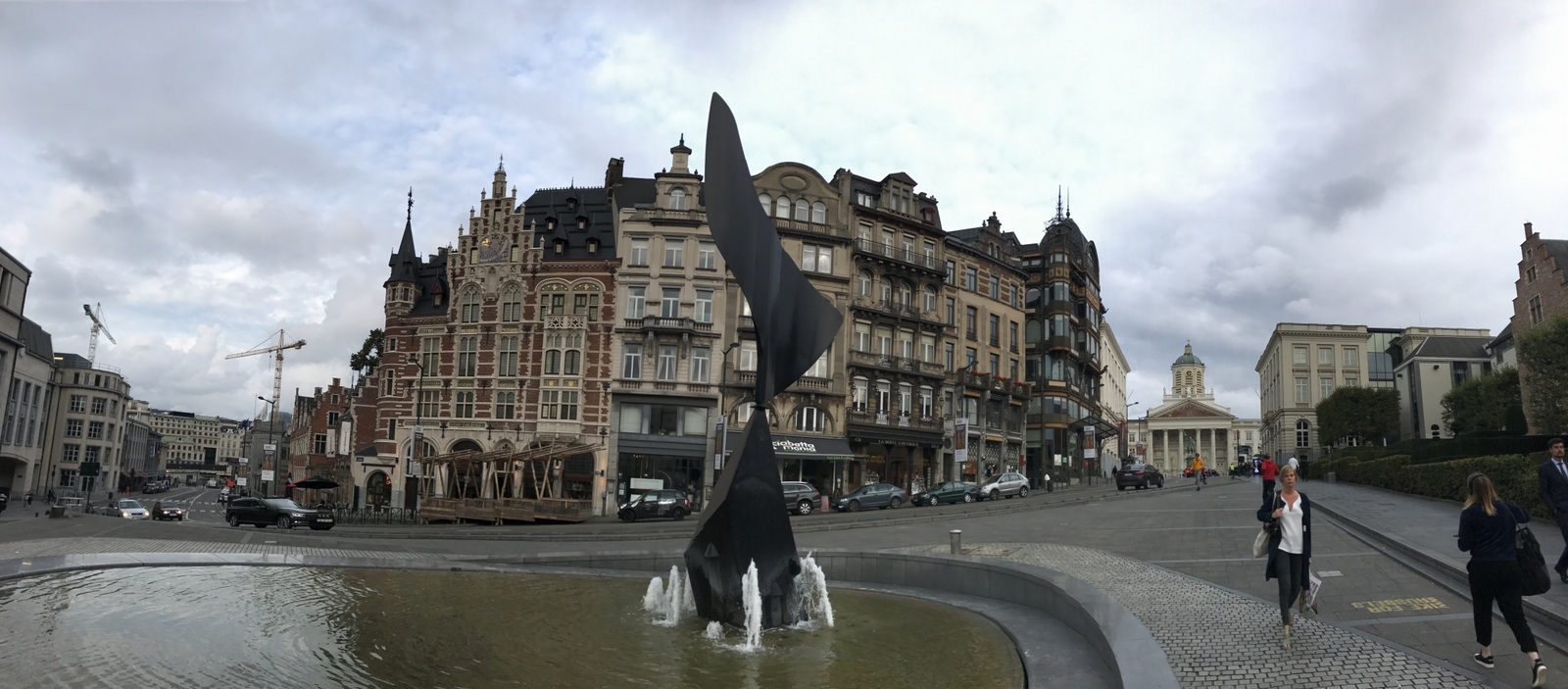
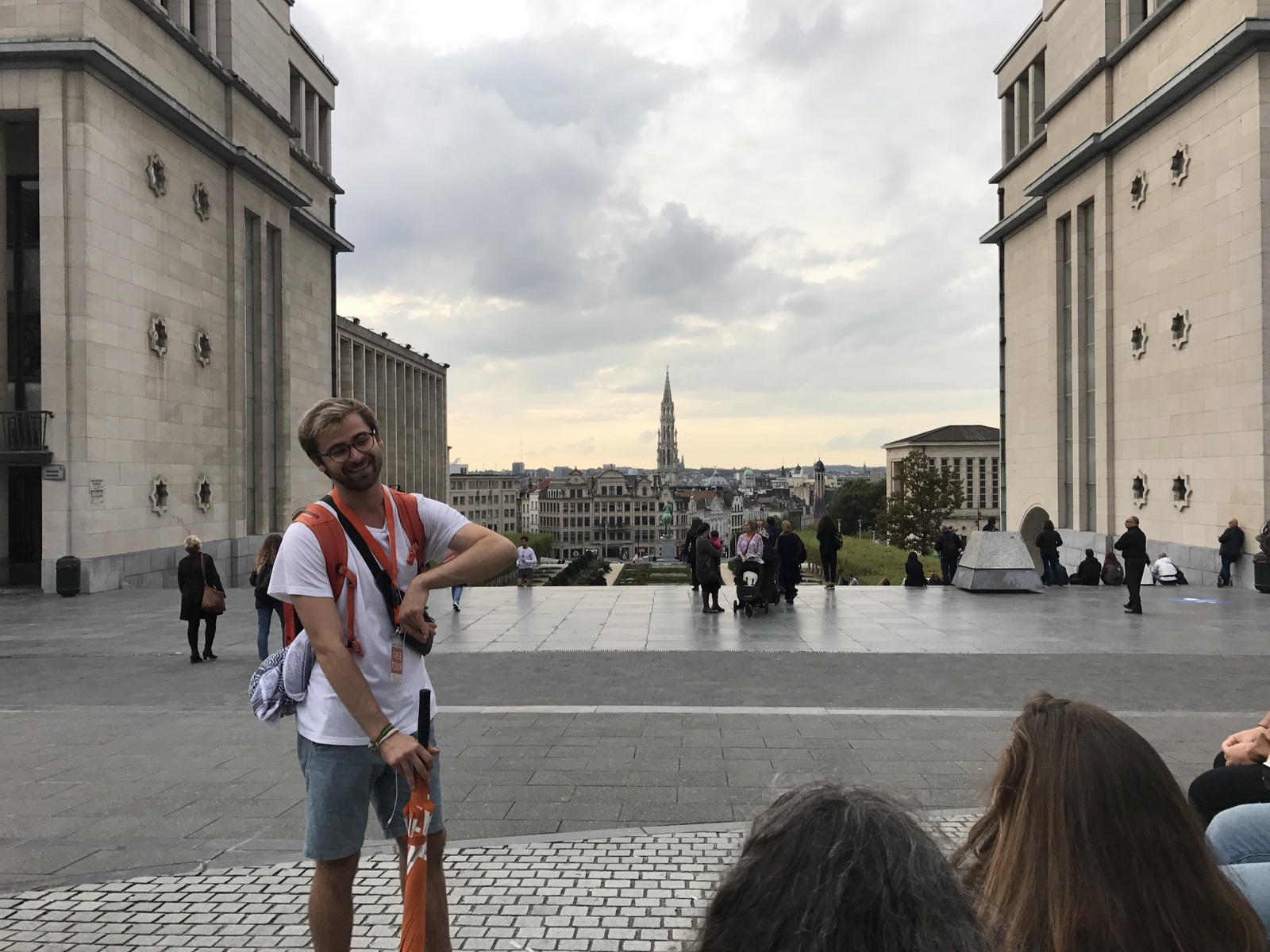
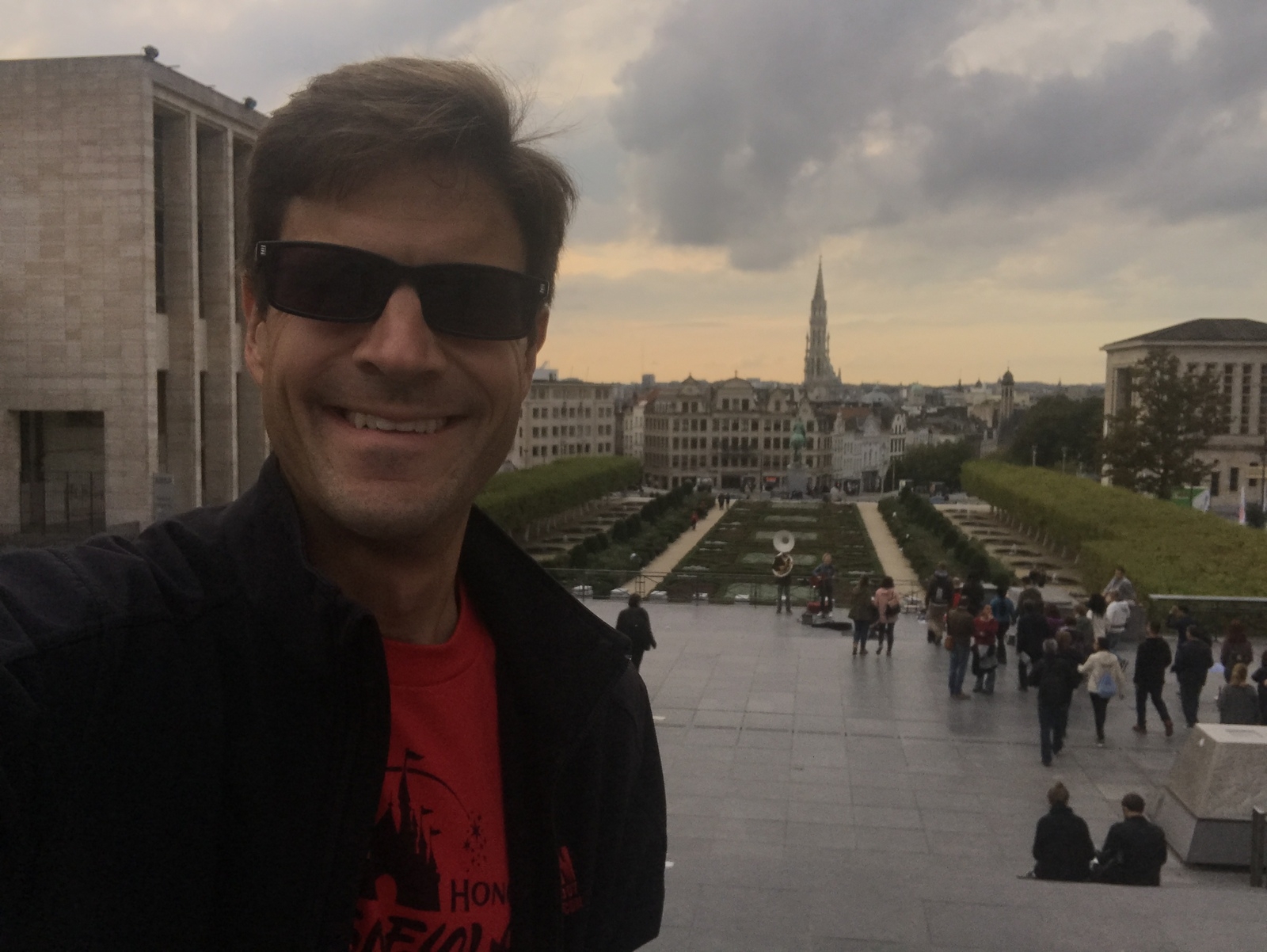
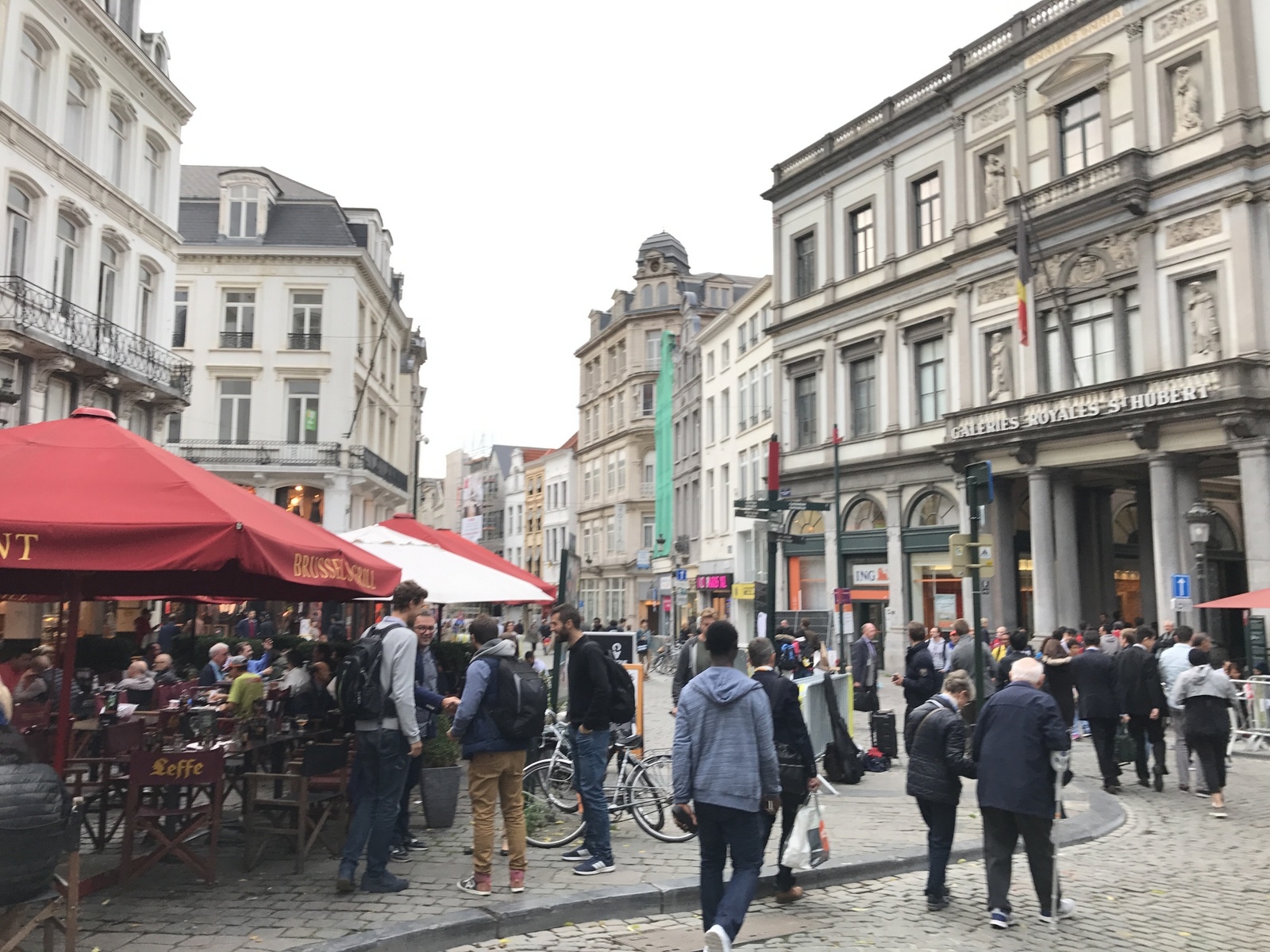
Blah, blah, blah, right? This is how I spent my afternoon. As for my evening? I enjoyed a one euro waffle. You could put all kinds of toppings on it – fruit, whipped cream, Nutella, etc. But Rick had warned me that they pretty much roll the waffle in sugar so it’s already plenty sweet plain. And he wasn’t kidding – I think I developed two cavities just within the first bite. But I have no regrets. Well, one regret. Should’ve had another one.
But after all, tomorrow is another day. And another waffle awaits.
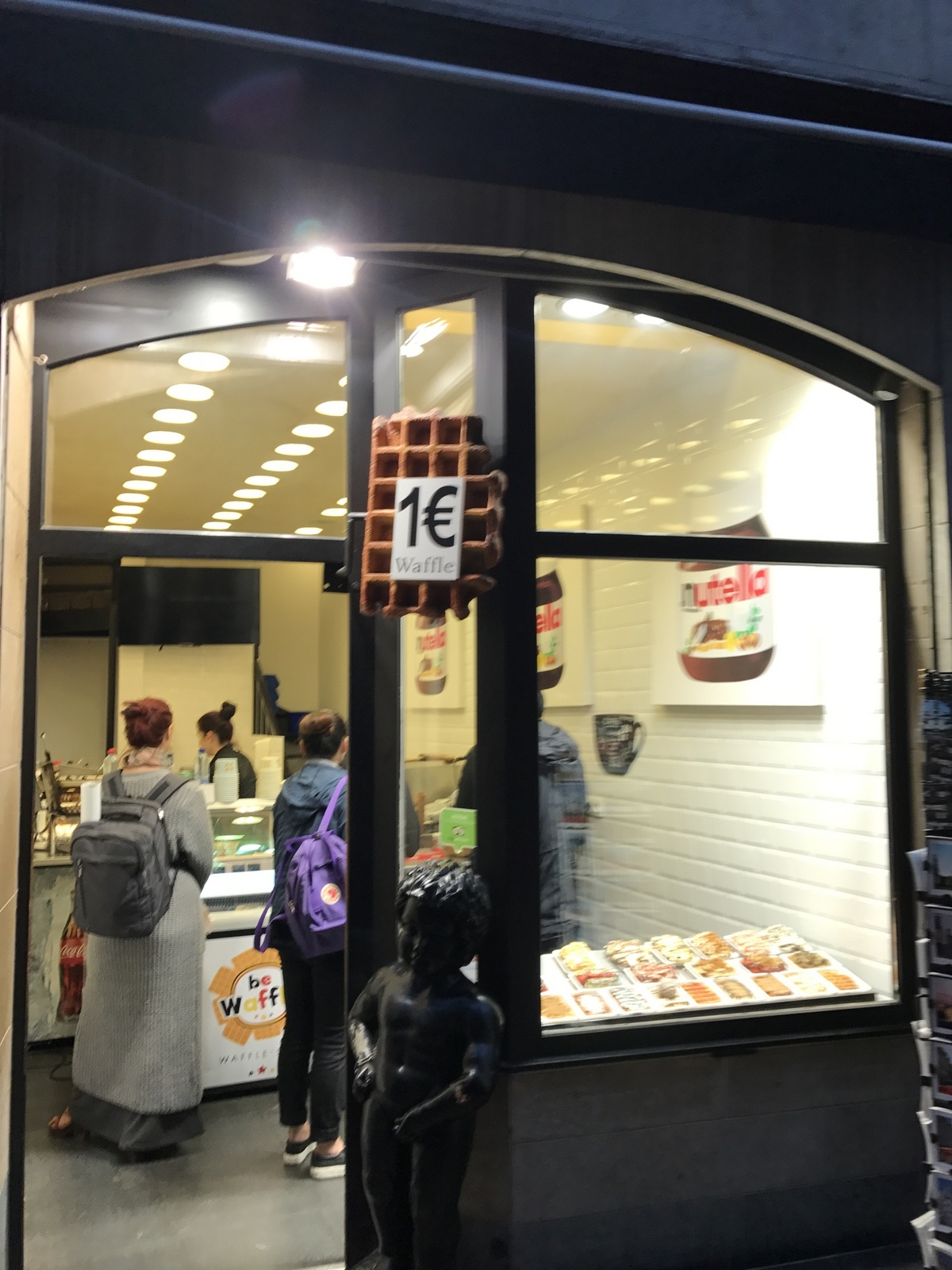
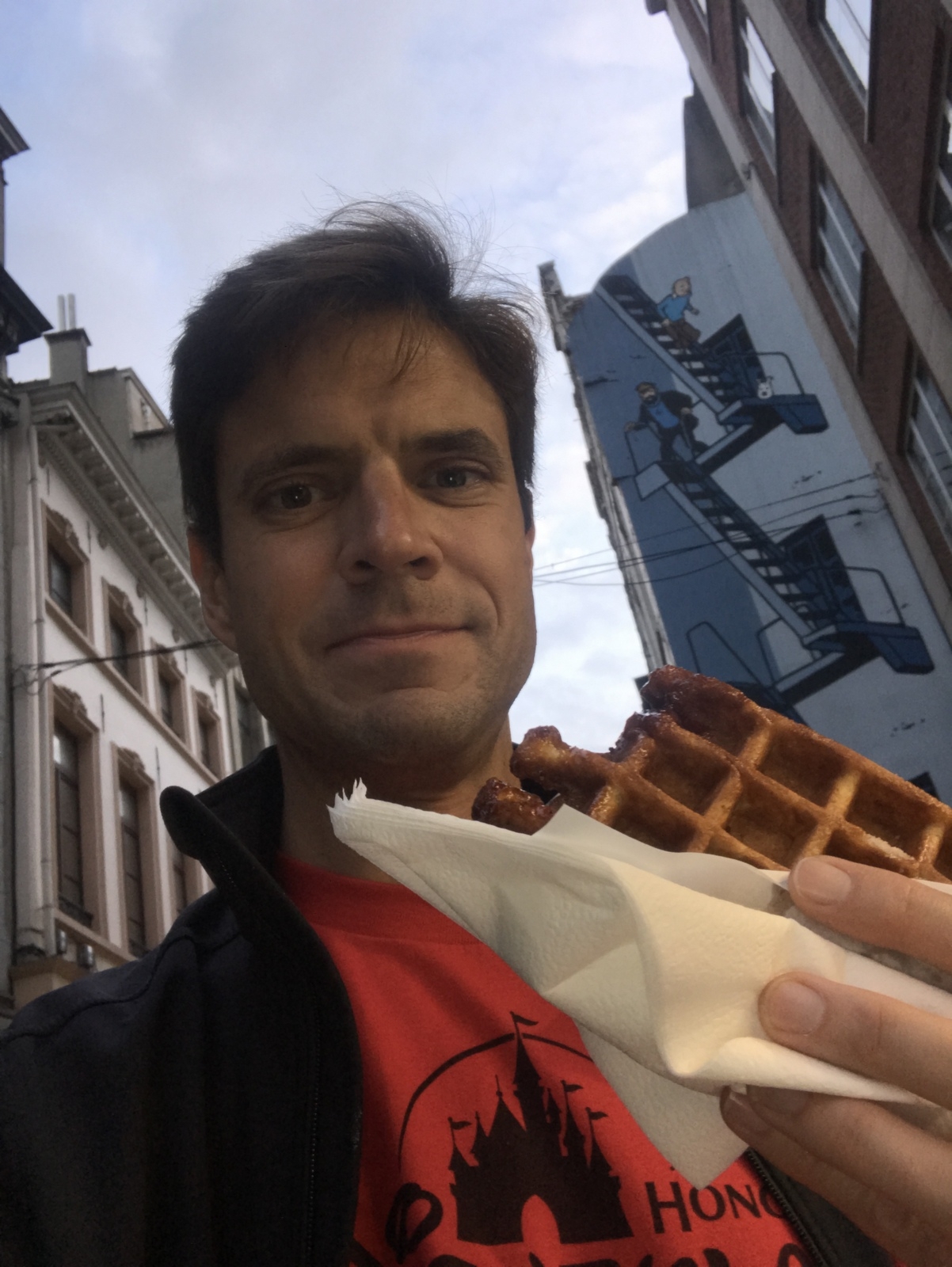
BTW – That’s Tin Tin behind me in the mural.