
I posted to Facebook a little story that I’ll snip and paste here for reference sake:
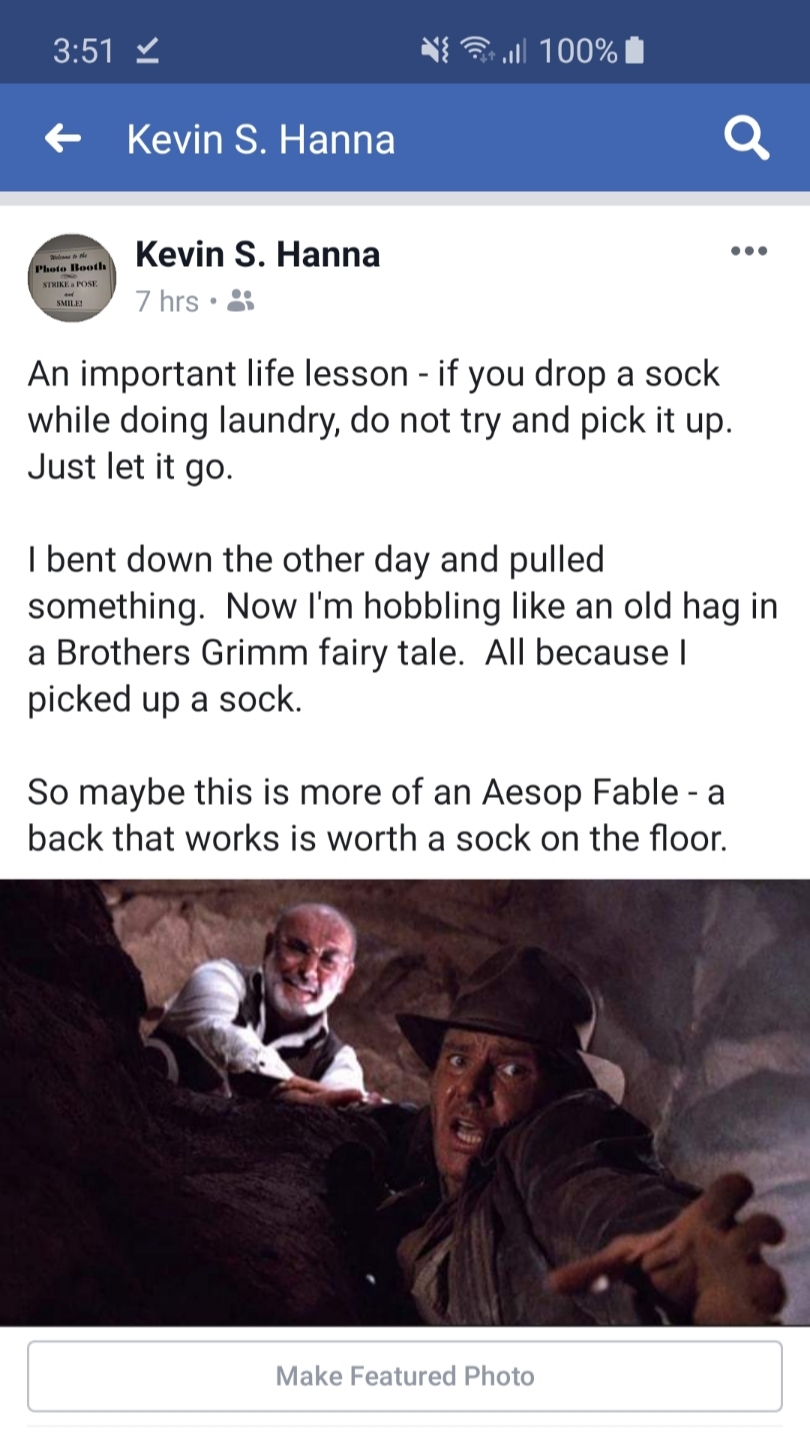 I would later comment on the photo discussing the inevitability of dropping out of this weekend’s race in our nation’s capital.
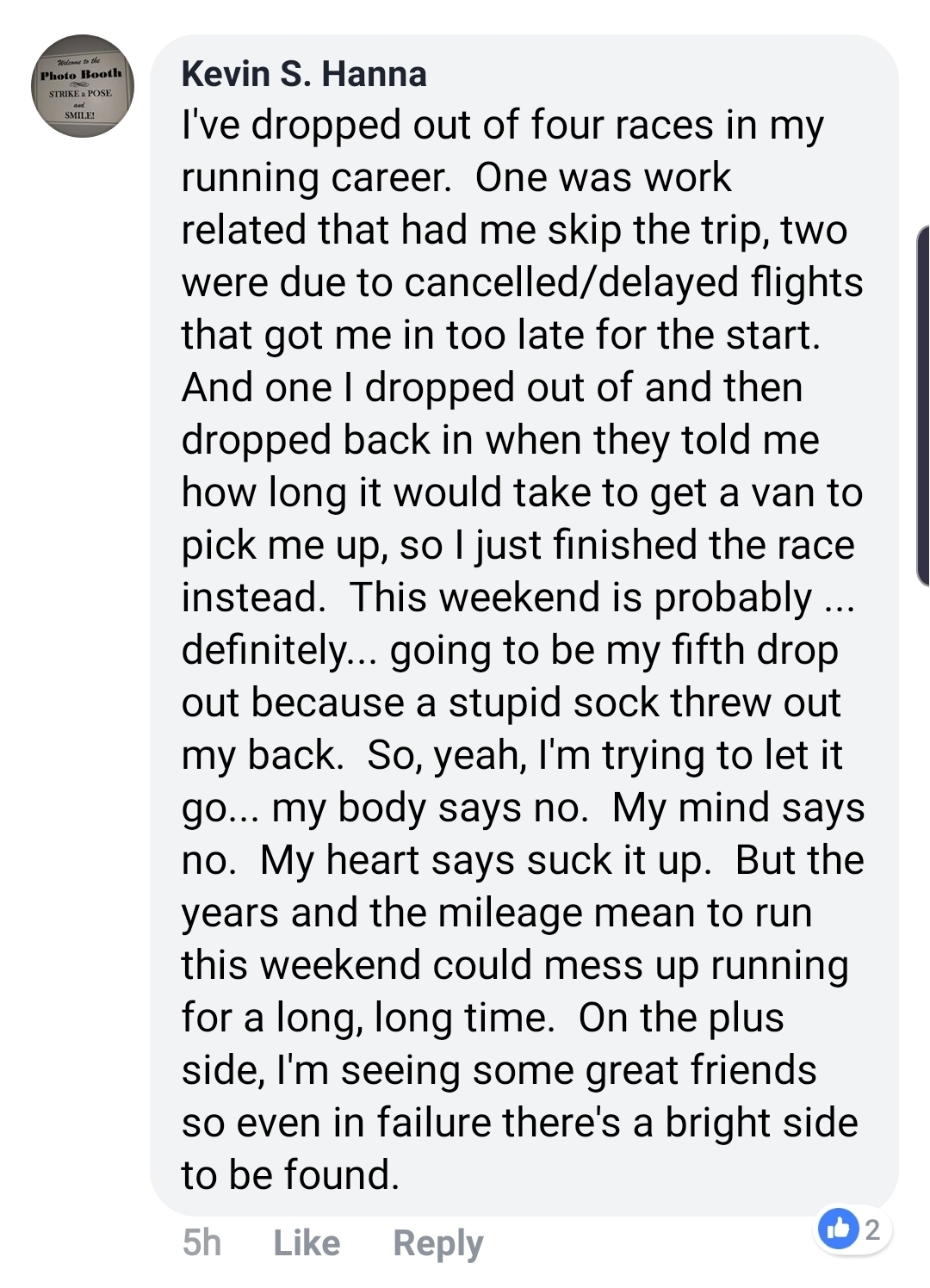
In the five hours since I posted that and started writing here, I realized I’ve actually dropped out of six (6) races prior to this upcoming race.
In December 2013, as I approached my goal of running 52 marathons in 52 weeks, I did something awful to my ankle. I was hobbled and just couldn’t finish the remaining races of the season. I actually had driven all the out to the far-flung fields of Connecticut from my then-girlfriend’s apartment in Boston to run a race in sleet and snow and worsening conditions. I was skidding and sliding on the back roads in the final miles to the park’s unplowed parking lot. The snow kept falling, my ankle was aching, and the thermometer was dropping. I cried in that parking lot as I just couldn’t muster the will or determination to get out of the car. I often try and block out that day as it was a really, really bad day, not just with running but with other personal matters. Turns out I’m really a bad patient when it comes to being sick/injured.
After seeing a physical therapist, a job I often shamefully pooh-pooh as being worthy of a medieval barber, I was told I really needed to take some time off to heal. As a result, I had to skip out of the year’s final race I had on December 31, 2013. That year I wound up with 50 races in 52 weeks… a major accomplishment that somehow rang hollow and painful. Which is stupid. As I said, I am a really poor patient when it comes to being sick/injured.
Anyway, full disclosure — I’ve pulled out of 6 races in my running career and Saturday will undoubtedly be my 7th. My brother tells me that’s still a 1.6355% failure rate, which is pretty good. I’ll take his word for it. I was told there would be no math today.
***
A friend of mine I’m set to run with in DC this weekend texted me and asked me about my back. My reply is below:
Yeah, it hurts like the Dickens… assuming “the Dickens” feels like somebody has a Kevin voodoo doll and is shoving a very large pin into my left hip and back. But it’s actually a little bit better this afternoon inexplicably. I figure I’ll pick up my bib and see what’s what on the day. I really should NOT run as I’m headed to a big race the following weekend I’d like to be in okay shape to do. But we’ll see. As I’ve said repeatedly, if this trip is just catching up with you all then it’s a great trip so there’s no complaints from me. Really looking forward to seeing everybody — I’m reminded more than ever these days of how important it is to surround oneself with sane, rational, and awesome people — so whatever happens run-wise, this weekend will be therapeutic!
I’m trying to remember that and to NOT push through the pain. The weird thing is, after I had decided 100% I was NOT going to run… the pain subsided a little bit. It hurts less chronically. Though there’s lingering issues and I’m still not 100% steady on my feet, it doesn’t feel like a giant sharp needle in my hip and side… more like maybe the tip of a needle nosed pair of pliers? So that’s progress, right?
But what exactly IS the etymology of “hurts like the Dickens?” To the Google-mobile!
According to THE PHRASE FINDER, a UK word search index, the phrase has absolutely nothing to do with Charles Dickens. It’s considered derived from a minced-oath or euphenism for a curse word — in this case it is thought to be a code word for “devil,” thus to hurt like the dickens is to be deviled with hurt.
This is deja vu all over again for me: much like my shared erroneous ignorance of thinking “Scott Free” related to the Dred Scott case, I had it all wrong. [FYI — “scot-free” which came into the news recently thanks to a poorly worded tweet seemingly derived from a bastardization of “shot-free” or a Scandanavian term for fee/tax free. For more information, visit your local library or click here].
Oh and I “pooh-pooh’d” Physical Therapists above. Pooh-pooh’s origin story can be found HERE.